Sunday, July 15, 2012

It's Perclot AMP.......No, It's Endoclot AMP

Cryolife last month announced that finally they had some good news regarding the litigation with Medafor, and under terms of the settlement, Medafor has agreed to pay CryoLife $3.5 million in cash. However the Atlanta based CryoLife foray into the powdered Hemostat market segment may still prove "interesting". When making their arrangement with Chinese Starch Medical for rights to Perclot in all territories worldwide excluding China, Hong Kong, Macau, Taiwan, North Korea, Iran and Syria. They also included the following in the contract:


  1.5 Product Applicators, Etc. SMI agrees to promptly notify CryoLife of all improvements to applicators, tips and other accessories included within or used in connection with the Products, including all new applicators, tips and other accessories. All such improvements and any such new applicators, tips or accessories to the Products shall be included within the Products and the Parties shall adjust the catalog of Products to reflect these new products, with any transfer price to be negotiated in good faith, but based solely on costs to SMI for such improvements and/or new applicators, tips and accessories. The Parties agree that the Endoscopic applicator system used for powder delivery via gastrointestinal endoscope, as further described on Schedule 2.1 is not an improvement or new applicator and is not included in this Agreement.

2.   Distribution

    2.1  Limitations on SMI Activities. During the term of this Agreement SMI agrees (i) to sell the Products exclusively to CryoLife for use in Permitted Clinical Applications within the Territory, (ii) to refrain from selling or licensing any Products to any Existing Distributor or Third Party for sale or distribution in Permitted Clinical Applications within the Territory, (iii) to refrain from directly or indirectly marketing, promoting, or encouraging any Third Party to market, promote or Distribute the Products for any of the Permitted Clinical Applications within the Territory, (iv) to refrain from licensing or transferring any AMP™ Technology to any Third Party within the Territory for the purpose of manufacturing any Products upon terms or conditions that would enable or allow such Third Party to sell any Products for Permitted Clinical Applications within the Territory. In addition, SMI agrees that it shall refrain until January 1, 2015 from (A) directly, or indirectly selling, permitting to sell, market, promote or encouraging third parties to sell, permit to sell, market or promote any Competitive Product (defined below) for any Permitted Clinical Application within the Territory or (B) licensing or transferring to any Third Party technology that would enable or allow any Third Party to manufacture any Competitive Product within the Territory. The provisions of the foregoing sentence shall be deemed further modified so that SMI may only take the actions described therein if SMI complies with Section 1.4 (and therefore CryoLife does not match the right of first refusal set forth therein). As used herein, “Competitive Product” means any powdered absorbable surgical hemostat that is intended for or could be used for a Permitted Clinical Application. The foregoing limitations do not apply to sales by SMI of those products described on Schedule 2.1.

Read the full document HERE

.
Now Cryolife and their partners face the interesting prospect of Chinese made Perclot AMP particles meeting them in the EU re-branded as "Endoclot".  

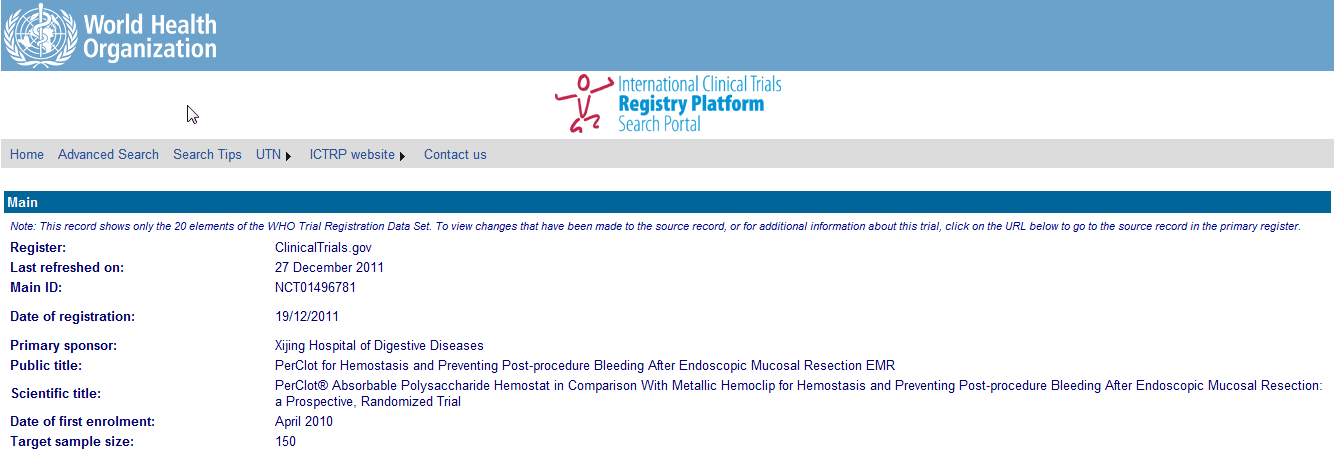
As can be seen HERE the original Chinese Xijing Hospital trial changes for the use of AMP show the changes from perclot to "endoclot", but the endoclot webpage discusses AMP particles....see HERE. 

The CRY Q2 Earnings Conference Call is scheduled for 7/31/2012. 
Click the images below to enlarge


Thursday, July 12, 2012

Study to Investigate the Safety and Effectiveness of TissuGlu in Abdominoplasty Surgeries Without the Use of Postoperative Drains


Cohera Medical, Inc.®, a leading innovator and developer of absorbable surgical adhesives and sealants, today announced the start of a no-drain clinical trial in 30 patients at two prominent surgery centers in Germany.  The study will investigate the safety and effectiveness of TissuGlu® Surgical Adhesive in the reduction of wound drainage, post operative seroma and related complications in abdominoplasty patients without the use of drains.
Currently, most patients who undergo abdominoplasty procedures and other large flap procedures require the insertion of drains to remove fluids that accumulate under the skin at the surgical site. In some cases, drainage is inadequate and the excess fluid accumulation (seroma) requires additional procedures for removal. The drains are often painful for the patient, can lead to infection and can impact the recovery process.
TissuGlu adheres the tissue flap created during the surgical procedure to the underlying tissue, helping to reduce the space where fluids can accumulate thereby eliminating the need to use surgical drains.  The ability to perform the procedure without drains would lead to a more comfortable recovery and a quicker return to normal activity for patients.
"We are excited to be part of this study utilizing TissuGlu to eliminate postoperative drains," said Dirk Richter, MD, of Wesseling, Germany.  "We look forward to enrolling more patients and believe that conducting abdominoplasty procedures without the need for drains would represent a significant improvement in patient care and comfort in these procedures.  The initial patients enrolled appear to be doing very well, with no seromas or complications reported in the first 48 hours after surgery."
"Initiation of this 'no drain' trial represents a major goal for TissuGlu," said Patrick Daly, President and Chief Executive Officer of Cohera Medical.  "We continue to make positive patient outcomes a priority and believe the elimination of post-surgical drains is an important milestone."
Drain management and discomfort is the leading patient complaint for plastic surgery procedures according to the top plastic surgery publications.  In addition, complication rates from seroma formation range from 15% to 52% following abdominoplasty procedures.


Monday, July 9, 2012

China Biologic Receives SFDA Manufacturing Approval Certificate for Human Coagulation Factor VIII

China Biologic Products, Inc., a leading fully integrated plasma-based biopharmaceutical company in China, today announced that its indirectly owned subsidiary, Shandong Taibang Biological Products Co., Ltd. ("Taibang") has received a manufacturing approval certificate from the China State Food and Drug Administration ("SFDA") for Human Coagulation Factor VIII ("FVIII"). With this certificate, the only approval remaining for Taibang's commercial production of FVIII is the SFDA's good manufacturing practice ("GMP") certification of the FVIII production line itself.

Taibang began research for FVIII in 2007 and successfully developed the technology in 2008. The Company conducted clinical trials from 2009 to 2010. In June 2010, the Company submitted required materials to Center for Drug Evaluation for approval to start manufacturing and passed on-site products verification in January 2011. The Company received official manufacturing approval certificate on June 21, 2012. FVIII will be primarily used in the treatment of hemophilia A.

Mr. David Gao, Chairman & CEO, said, "Receiving SFDA manufacturing approval represents the culmination of more than five years of work and the first technological approval of a coagulation factor product developed by Taibang. With the addition of Factor VIII, we should soon be able to offer three major categories of blood products: albumin products, immunoglobulin products and coagulation factor products. This will further strengthen our competitive position as a leading plasma-based biopharmaceutical company in China."

"We are very proud to bring FVIII to hemophilia A patients in China," continued Mr. Gao. "We believe that Human Coagulation Factor VIII addresses a critically unmet need of a large patient population and helps ease under-supply of coagulation products. Although it is not possible to specify a definitive timeframe in which we will receive GMP approval, we expect our FVIII production to be inspected by SFDA and then GMP certified by the end of 2012. Going forward, we intend to continue to develop and manufacture life-enhancing, effective, quality-assured products."

About China Biologic Products, Inc.

China Biologic Products, Inc., is a leading fully integrated plasma-based biopharmaceutical company in China. The Company's products are used as critical therapies during medical emergencies and for the prevention and treatment of life-threatening diseases and immune-deficiency related diseases. China Biologic is headquartered in Beijing and manufactures over 20 plasma-based products through its indirect majority-owned subsidiaries, Shandong Taibang Biological Products Co., Ltd. and Guiyang Dalin Biologic Technologies Co., Ltd. The Company also has an equity investment in Xi'an Huitian Blood Products Co., Ltd. The Company sells its products to hospitals and other healthcare facilities in China. For additional information, please see the Company's website www.chinabiologic.com .

Friday, June 8, 2012

Study with Fibrocaps(TM) Lead product on track for market launch in 2014


LEIDEN, The Netherlands & SEATTLE, Jun 06, 2012 (BUSINESS WIRE) -- ProFibrix B.V., a leader in the development of innovative bioactive products to stop bleeding (hemostasis), today announced the start of its pivotal Phase III clinical trial with Fibrocaps (FINISH-3) in spine, liver, vascular and soft tissue surgery.
FINISH-3 is a multicenter, randomized, single-blind, controlled Phase III trial of Fibrocaps in 672 surgical patients with mild to moderate surgical bleeding. The main objectives of the study are to demonstrate superior efficacy of Fibrocaps vs. gelatin sponge within each surgical indication, and to confirm the overall safety results from the Phase II Fibrocaps trials completed in 2011.
Dr. Paul Frohna, Chief Medical Officer of ProFibrix said: "We are very pleased to announce the randomization and treatment of the first patients in the international FINISH-3 trial less than 4 months after completing our End-of-Phase II meeting with the U.S. FDA. Based on the excellent Phase II study results, the investigators are very eager to enroll their patients into our study and we remain on track for regulatory filings in the U.S. and EU in 2013. Based on the product's unique properties, and the overwhelmingly positive feedback we are receiving from the surgical community, we believe Fibrocaps should be able to capture a substantial share of the US$ 1 billion topical hemostat market."
The Fibrocaps used in the pivotal Phase III clinical trial has been manufactured by ProFibrix's commercial manufacturing partner Nova Laboratories Limited (Leicester, UK). Peter White, Managing Director of Nova Laboratories said: "It is great to be part of this exciting project and to manufacture the Phase III product and I am looking forward to our long term collaboration."
About Fibrocaps
Fibrocaps is a mixture of two essential blood clotting proteins, fibrinogen and thrombin, and is a unique dry powder topical fibrin sealant being developed to stop bleeding during or after surgery. Fibrocaps is clearly differentiated from existing liquid tissue sealants and hemostats: it is ready for immediate use, and is stable at room temperature.
About the FINISH-3 trial
FINISH-3 is a prospective, randomized (2:1), single-blind, controlled, pivotal Phase III trial of Fibrocaps vs. active control in 672 subjects undergoing spinal (n=168), liver (n=168), vascular (n=168) and soft tissue surgery (n=168). The study will be conducted at 65 sites across Europe and the U.S. Estimated completion date is May 2013.
For more details on the study, please go to http://www.clinicaltrials.gov .
About ProFibrix
ProFibrix ( www.profibrix.com ) was founded in 2004 and is headquartered in Leiden, The Netherlands, with a subsidiary in Seattle, WA, USA. The company leverages its expertise in fibrinogen technology to develop and bring to market innovative products for the hemostasis and regenerative medicine markets. Human fibrinogen plays a pivotal role in blood clotting and tissue healing. ProFibrix is led by a team with extensive commercial, clinical and scientific experience in the hemostasis field.
SOURCE: ProFibrix

Thursday, June 7, 2012

HemCon Adds Barry Starkman as CEO


HemCon Medical Technologies, Inc., an industry leader in hemorrhage control technologies and developer of lyophilized (freeze-dried) human plasma for the U.S. Army, announced today the appointment of Barry Starkman as Chief Executive Officer. Starkman joins HemCon with more than 30 years of experience in biologics and medical technology manufacturing.
"As we reorganize and restructure with the objective of successfully exiting Chapter 11, Barry is an extremely important addition to the HemCon team. His leadership and expertise will prove valuable in realizing the full potential of our lyophilized plasma program (LyP program), and in developing the optimal strategy for the Medical Device division," said Bill Wiesmann, Chairman and Co-Founder of HemCon. "Barry rounds out our executive team, working with Nick Hart who will continue his role as President and CFO."
As Chief Executive Officer, Starkman's focus will be on the execution and delivery of the LyP program through Phase 2 clinical trials and planning and executing on facility expansion to allow HemCon to enter Phase 3 clinical trials for the LyP program. He will also review the Medical Device division fully to determine the optimal means by which this business can be developed and contribute towards HemCon's overall financial performance.
Starkman's experience spans pharmaceutical products, biotech, and medical devices, matching the commercial applications for HemCon's LyP Program and Medical Devices division. His background also includes manufacturing management in the areas of facilities design, cGMP manufacturing requirements and Lean 6 Sigma applications.
Prior to joining HemCon, Starkman served as Vice President of Operations at Promega, where he was responsible for global manufacturing, planning and logistics for the $300 million organization. Starkman had previously overseen the design, construction, start-up and operation of Genentech's $450 million state-of-the-art formulation, packaging and distribution facility in Portland, serving as General Manager. Earlier in his career, Starkman worked for 24 years for Merck taking on increasing responsibility which culminated at Director of Manufacturing within Vaccine Operations.
"I am thrilled to become part of the HemCon team and bring my leadership skills to a company with breakthrough innovation in the plasma world and a proven track record of efficacious and safe medical devices which give HemCon immense potential," said Barry Starkman. "I look forward to working with the team in a timely exit from Chapter 11 and then helping HemCon realize its potential as a highly successful and viable enterprise."
HemCon Medical Technologies, Inc. ( www.hemcon.com ), founded in 2001, develops, manufactures, and markets innovative technologies for rapid delivery of plasma and hemostatic devices for the control of bleeding resulting from trauma or surgery. HemCon products are designed for use by military and civilian first responders as well as medical professionals in hospital and clinical settings where rapid supply of plasma and control of bleeding are of critical importance. HemCon is headquartered in Portland, Ore., with additional commercial operations in Ireland and the Czech Republic.
SOURCE: HemCon Medical Technologies, Inc.

Thursday, May 31, 2012

HaemoCer Instrumentation Advances Plant-sourced Hemostat Applications into Minimally Invasive Surgeries


BAYREUTH, Germany, May 31, 2012 /PRNewswire/ --BioCer Entwicklungs GmbH (BCE), a German based medical device manufacturer, announces the CE approval of its advanced HaemoCer™ Universal Applicator (UA). HaemoCer™ UA is a delivery configuration for applications of the HaemoCer™ Absorbable Polysaccharide Hemostat (APH) system in minimally invasive surgical procedures.
The HaemoCer™ UA system is a unique instrumentation for laparoscopic, ENT, spinal and other MIS procedures where precise delivery of APH particles to the bleeding site is mandatory. The delivery instrument is easily attached to the HaemoCer™ bellows dispenser and enables hemostat delivery under direct vision to the wound site for the control of capillary, venous and arteriolar bleeding. The initial HaemoCer™ 5 gram product range has also expanded to include multiple size configurations meeting the strong international market demand for HaemoCer™ in multidisciplinary procedures.
Dr. Markus Heinlein, Managing Director of BioCer, commented, "The clinical introduction of HaemoCer™ UA offers surgeons a delivery option within the expanding practice of minimally invasive surgery. Collaborating with leading laparoscopic surgeons and German engineers, our system has been designed for the controlled release of hemostatic particles. HaemoCer™ UA encompasses 3 unique advances, including a press-and-release locking system facilitating UA tip placement without uncontrolled discharge. Secondly the system features a tip design which minimizes tip blockage, both common difficulties with current particle delivery devices. Finally the new instrumentation is sold separately and the push-on coupling sheath will accommodate other devices allowing medical professionals and patients to immediately benefit from this new instrumentation while converting stocks to HaemoCer™."
BioCer Entwicklungs-GmbH, HaemoCer APH particles are manufactured utilizing a Polysaccharide Ultra-hydrophilic Resorbable Engineering (PURE) process.  HaemoCer™ contains no human or animal components and is developed and manufactured in Germany. For information, distribution inquiries, and licensing options, please visit http://www.biocer-gmbh.de or email info@biocer-gmbh.de.

Sunday, May 27, 2012

Baxter Announces ADVATE Approval in China for the Treatment of Hemophilia A


Baxter International Inc. announced the approval of ADVATE[Recombinant Human Coagulation Factor VIII for injection] for the control and prophylaxis of bleeding episodes in individuals with hemophilia A (congenital factor VIII deficiency) in China by the State Food and Drug Administration (SFDA). It is estimated that more than 50,000 people in China are living with hemophilia A.
''The introduction of recombinant FVIII therapies in China offers new treatment options for hemophilia patients. The launch of ADVATE is another step in advancing hemophilia care in China,'' said Professor Yang Renchi, Institute of Hematology and Blood Diseases Hospital, Chinese Academy of Medical Sciences and Peking Union Medical College, the leading professional hematological institution providing basic medical research with clinical services in China.
''Great strides have been made in managing hemophilia, allowing people with this serious condition to live longer, more active and fulfilling lives than ever before,'' said Guan Tao, Secretary General of Hemophilia Home, the hemophilia patient organization in China. ''The availability of ADVATE will be an important milestone for people with hemophilia in China.''
ADVATE is infused directly into the bloodstream and works by temporarily raising the level of factor VIII in the bloodstream, allowing the body's blood clotting process to properly function. Extensive global use and multiple clinical trials demonstrate clinical evidence for ADVATE. With SFDA's action, ADVATE is now approved in 54 countries worldwide.
''The approval of ADVATE in China marks an important milestone for Baxter and supports our ongoing commitment to treating individuals living with hemophilia,'' said Ludwig Hantson, Ph.D., president of Baxter's BioScience business.
Baxter continues to work closely with the Chinese hemophilia community, including both patients and treaters, to provide access to care for this life-saving, life-sustaining therapy. In 2010, Baxter cooperated with the Ministry of Health to set up a ''Hemophilia Disease Management System,'' China's first nationwide hemophilia patient registration and management system integrating diagnosis and treatment information. In recent years, Baxter has donated more than five million IUs of hemophilia products to Chinese patients and has provided a number of resources to raise awareness of the disease.
About ADVATE
ADVATE [Antihemophilic Factor (Recombinant) Plasma/Albumin-Free Method] was initially approved by the FDA in July 2003 for control and prevention of bleeding episodes in adults and children (0-16 years) with hemophilia A. ADVATE is a full-length (derived from the complete FVIII gene) recombinant FVIII product that is processed without any blood-based additives. Because no blood derived components are added at any stage of the manufacturing process, the potential risk of transmitting pathogens that may be carried in blood-based additives is eliminated. There have been no confirmed reports of transmission of HIV, HBV or HCV with rFVIII therapies.
ADVATE is approved in the United States, Canada, 27 countries in the European Union, Argentina, Australia, Brazil, Chile, China, Colombia, Croatia, Hong Kong, Iceland, Iraq, Japan, Macau, Malaysia, New Zealand, Norway, Panama, Puerto Rico, Serbia, Singapore, South Korea, Suriname, Switzerland, Taiwan, Uruguay and Venezuela.
In the United States, ADVATE [Antihemophilic Factor (Recombinant) Plasma/AlbuminFree Method] is also indicated for routine prophylaxis to prevent or reduce the frequency of bleeding episodes in adults and children (0-16 years) with hemophilia A. ADVATE is the only antihemophilic factor approved in the United States for prophylactic use in both adults and children. ADVATE is not indicated for the treatment of von Willebrand disease.

FastSeal(R) Bioabsorbable Vascular Access Closure System


Vascular Closure Systems, Inc, First in Human (FIH) Use of the FastSeal(R) Bioabsorbable Vascular Access Closure System -- 100% Success Rate, Including Patients with Challenging Anatomy and Vessel Condition.
The company is pleased to announce that after receiving Ethical Committee (EC) and Ministry of Health (MOH) approval, for the first human use of the company's FastSeal(R) Bioabsorbable Vascular Access Closure System, Phase I of the First in Human (FIH) clinical testing has been completed, with 100% successful results, and no adverse effects, including post procedural discomfort. The average Time to Hemostasis (TTH) was less than one minute. The clinical cases included vessels that were normal, diseased, severely fibrosed and with calcified plaque.
The initial series of human clinical cases were performed on Percutaneous Coronary Intervention (PCI) patients, by Prof. Alessandro Bortone of the Policlinico di Bari, University of Bari School of Medicine (IT). Phase II testing will begin within the next two weeks.
The detailed FIH test results will be presented at multiple upcoming medical conferences.
The company is planning to begin International commercialization (pending regulatory approval) during the fourth quarter of this year.
About FastSeal(R)
Our Bioabsorbable Vascular Access Closure System is packaged and used as a single piece unit, with no assembly required prior to use, and no separate deployment device is needed to be inserted into the puncture site. Simply insert the FastSeal(R) system into the hub of the procedural introducer sheath, and advance the attached plunger. The system design enables hemostasis within less than a minute after the non-collagen sealing element has been deployed. Our system doesn't require the use of a specific type or brand of vascular introducer sheath, and is compatible with any commercialized vascular introducer sheath with a useable length of between 10 to 12 cm. Once the sealing element has been deployed, no external compression is required. The inner vessel section of the sealing element is absorbed within 10 to 14 days. The remainder of the sealing element is completely absorbed within 21 days. The FastSeal(R) system has the ability to be removed after deployment (if desired), without causing trauma to the vessel or requiring a surgical intervention.

CSL Behring Data Shows 4-Factor Prothrombin Complex Concentrate Is Effective


Data presented by CSL Behring at the 2012 Thrombosis and Hemostasis Summit of North America (THSNA) showed that a balanced, human 4-factor prothrombin complex concentrate (PCC) is as effective as the current standard of treatment in stopping bleeding in patients receiving vitamin K antagonist therapy (i.e., warfarin). Currently in the United States, fresh frozen plasma is the standard treatment for warfarin reversal. The data are from the first and largest randomized clinical study to demonstrate the non-inferiority of 4-factor PCC to plasma through clinical endpoints and to show superiority through bioanalytical endpoints.
The Phase IIIb study results showed that the hemostatic efficacy of 4-factor PCC was comparable to plasma at 24 hours in patients who required urgent reversal of warfarin therapy (72.4 percent and 65.4 percent, respectively). Additionally, the co-primary efficacy endpoint analysis showed that the 4-factor PCC was superior in achieving target INR correction within 30 minutes at the end of infusion as compared to plasma (62.2 percent and 9.6 percent, respectively). Four-factor PCC was also superior to plasma in rapidly and safely raising the levels of clotting factors II, VII, IX, X, and anticoagulant Proteins C and S at the same 30 minutes post-treatment time point (p values<0.0001).
"Patients on warfarin therapy are susceptible to acute and serious bleeding. For the physician, quickly stopping that bleeding is absolutely critical," said Ravindra Sarode, M.D., Director of Transfusion Medicine and Hemostasis Reference Laboratory at the University of Texas, Southwestern Medical Center, who presented the data. "This trial demonstrates that 4-factor PCC may offer healthcare professionals an important new treatment advance over plasma in managing patient outcomes in an important critical care setting."
The study also found that PCC was well-tolerated in patients and that the incidences of severe treatment-emergent adverse events, serious adverse events and deaths were generally similar between the PCC and plasma groups. Also, PCC was shown to possibly reduce the risk of transfusion-associated circulatory overload - that is, when too much fluid is transfused or transfusion is too rapid, which can lead to cardiac events - when compared to plasma (8.7 percent compared to 19.3 percent, respectively).
"We are very encouraged by the results, as this is the first and largest randomized clinical study showing 4-factor PCC is highly effective in reducing INR and increasing factor levels to support hemostatic efficacy during warfarin-induced bleeding," said Russell Basser, M.D., Senior Vice President, Global Clinical R&D, at CSL Behring. "CSL Behring is advancing our investigational 4-factor PCC through rigorous clinical study with the goal of bringing to the United States a safe, effective new treatment option for people who are at risk of major bleeding that results from warfarin use."
About Prothrombin Complex Concentrate (PCC) (Human)
Prothrombin complex concentrates (PCC) are derived from human plasma. CSL Behring's investigational PCC contains four important pro-coagulant factors in significant quantities: Factor II (prothrombin), Factor VII, Factor IX and Factor X, as well as anticoagulant Proteins C and S.
Guidelines from the American College of Chest Physicians recommend 4-factor PCC, rather than plasma, for rapid reversal of anticoagulation in patients with vitamin K antagonist associated major bleeding. The guidelines also recommend the use of vitamin K (5 to 10 mg) administered by slow intravenous (IV) infusion rather than reversal with coagulation factors alone.
About the Study
This was an open-label, randomized, multicenter Phase IIIb study to assess the efficacy, safety and tolerance of human 4-factor prothrombin complex concentrate (PCC) to plasma for rapid reversal of acute major bleeding in patients receiving warfarin therapy. The study enrolled 212 patients. The primary endpoint was hemostatic efficacy with respect to the adequacy of stopping an ongoing major bleed within 24 hours from the start of infusion. The secondary endpoints evaluated plasma levels of major clotting factors (Factors II, VII, IX, X, proteins C and S); time to INR correction; number of transfusions, amount of blood products used, and hemostatic agents; and safety and tolerability (including all-cause mortality).

Tuesday, May 8, 2012

3 Chinese drug makers recall 13 chromium-tainted (porcine)gelatin products

Three pharmaceutical companies have recalled their chromium-contaminated drug capsules after authorities suspended sales of 13 types of problematic medicines.
Tonghua Yason Pharmaceuticals in Northeast China's Jilin province said the company decided to recall all tainted products made since 2010.
"Pharmaceutical producers do not possess the capability to examine capsules, so we just simply checked the quality report provided by capsule suppliers and then let them go," an anonymous official with the company's product quality department was quoted as saying by stcn.com, a website run by Securities Times.
But the company said the producer of the problematic capsules was a Zhejiang-based company and was not among those exposed by media.
China Central Television revealed in an investigative program on Sunday that nine pharmaceutical companies were packaging medicines with capsules made with industrial gelatin, which contains a much higher degree of chromium than edible gelatin.
The industrial gelatin was made from waste leather at plants in Jiangxi, Zhejiang and Hebei provinces, according to the report. (Pictured above: 
Huge piles of substandard leather scraps at the warehouse of Xueyang Gelatin and Glair Factory in Hengshui, Hebei province, were used to make gelatin that was sold to capsule makers. Wang Min / Xinhua).
Normally, capsules are made with material from animal bones.
Excessive intake of chromium can result in chronic diseases. 


Jilin-based Huinan Tianyu Pharmaceutical posted a statement on its website saying that it is recalling the batch of products exposed by CCTV, but "those products were not problematic because they were produced in 2009 and they accorded with the standards set in related code released in 2000".
The Chinese Pharmacopoeia, amended in 2010, permits no more than 2 milligram of chromium per 1 kilogram of medicine. Before that, the cap was 5 mg per 1 kg for heavy metal, but it had no specific stipulation about chromium, said the announcement.
The company's products were found with 3.54 mg of chromium per 1 kg of medicine.
Dandong Tongyuan Pharmaceutical in Northeast China's Liaoning province also announced the recall of its chromium-contaminated products, according to China News Service.
Xiuzheng Pharmaceutical Group in Jilin said in a statement on its website that the company has suspended sales of the problematic products but said "the capsule suppliers we pick are quality firms that meet all the country's standards and we are re-examining those products".
After the chromium scandal was exposed, websites for three pharmaceutical companies involved, including Xiuzheng, were hit by hackers.
Song Xunjie, a manager with Xueyang Gelatin and Glair Factory in Hebei province, was detained on Monday by police and suspected of setting fire to his factory to eliminate evidence.
The fire did not cause any casualties. The factory had suspended production and police sealed 200 tons of products there.
The factory mainly sold products in Beijing and Zhejiang, as well as cities such as Changzhou, Jiangsu province, and Xiamen, Fujian province, according to Xinhua News Agency.
Sun Zhongshi, an expert with the National Rational Drug Use Monitoring System under the Ministry of Health, said the drug watchdog paid more attention to the quality of medicine inside the capsules rather than the capsules themselves, and should draw a lesson from this scandal.

SOURCE: China Daily