
Stefanie Schulz-Schupke, M.D., of the Deutsches Herzzentrum Munchen, Technische Universitat, Munich, Germany and colleagues assessed whether vascular closure devices are noninferior (not worse than) to manual compression in terms of access site-related vascular complications in patients undergoing diagnostic coronary angiography. The study appears in the November 19 issue of JAMA, a cardiovascular disease theme issue.
Percutaneous (through the skin) coronary angiography and interventions have become a cornerstone in the diagnosis and treatment of coronary artery disease. A substantial proportion of the adverse effects associated with these procedures is related to access-site complications. The common femoral artery (a large artery in the groin) is still the most frequently used access site. After the procedure, closure of the artery access site is usually achieved by manual compression. Since the mid-1990s, however, vascular closure devices (VCDs) have been introduced into clinical practice with the aim of improving efficacy and safety. Different types of VCDs have been developed, including intravascular and extravascular. However, concern exists about the safety of VCDs in comparison with manual compression, according to background information in the article.
For this study, conducted at four centers in Germany, 4,524 patients undergoing coronary angiography via the common femoral artery were randomly assigned to receive an intravascular VCD (n = 1,509), extravascular VCD (n = 1,506), or manual compression (n = 1,509) to achieve hemostasis (defined as no bleeding or only light superficial bleeding and no expanding hematoma [a localized swelling filled with blood]). Before hospital discharge, imaging of the access site was performed in 4,231 (94 percent) patients.
The primary end point (the composite of access site-related vascular complications at 30 days after randomization with a two percent noninferiority margin) was observed in 208 patients (6.9 percent) assigned to receive a VCD and 119 patients (7.9 percent) assigned to manual compression (difference, -1.0 percent). In addition, the time to hemostasis was significantly shorter with VCD compared with manual compression; time to hemostasis was shorter with intravascular VCD vs extravascular VCD; and device failures were less frequent with intravascular VCD vs extravascular VCD.
The authors write that the results of this trial may represent an important development for the clinical use of these devices. "Overall, the increase in efficacy of VCD use, with no trade-off in safety, provides a sound rationale for the use of VCD over manual compression in daily routine."
Showing posts with label vascular closure. Show all posts
Showing posts with label vascular closure. Show all posts
Sunday, November 16, 2014


Tuesday, August 19, 2014
Cardiva Medical, Inc. Announces Completion of the first two tranches of Series 3 Private Equity Financing and the Closing of a Senior Secured Debt Facility with GE Capital
SUNNYVALE, Calif., Aug. 19, 2014 /PRNewswire/ -- Cardiva Medical, Inc. announced today that it has closed the first two tranches of a$16.5 million Series 3 private equity financing and a $12.5 million senior secured facility with GE Capital. The Company will use the proceeds of the Series 3 private equity financing and debt facility to expand commercial efforts for its VASCADE® Vascular Closure System in the United States.
Investing in Series 3 private equity financing was a new investor, Canepa Advanced Healthcare Fund, L.P., who joined existing investors PTV Sciences, AmKey Ventures and TriVentures II Fund L.P. Mr. Paul Enever from Canepa U.S., LLC, which serves as Investment Advisor to Canepa Advanced Healthcare Fund, L.P., has joined the Cardiva Board of Directors.
"We are extremely pleased that Canepa Advanced Healthcare, L.P. has joined Cardiva's current investors in this financing and that Paul Enever has joined our Board of Directors," said Charles Maroney, CEO. Maroney continued, "With the Series 3 equity financing and GE debt facility, Cardiva now has the financial resources to establish VASCADE as a leading extravascular closure technology which we believe can benefit both patients and healthcare providers in the United States by minimizing complications and associated costs and improving patient care when compared to conventional vascular closure devices."

Thursday, November 21, 2013
Study: Closure devices cut complications after cardiac procedure (VIDEO)
The use of vascular closure devices significantly reduced complications and the need for transfusions in obese and overweight patients undergoing transfemoral percutaneous coronary intervention (PCI), but the benefit over manual closure was not seen in lean and normal-weight patients or in those treated with a glycoprotein IIb/IIIa inhibitor, researchers reported.
The benefit was also counterbalanced by a small increase in risk of retroperitoneal bleeding, Hitinder S. Gurm, MD, of the University of Michigan Cardiovascular Center in Ann Arbor, and colleagues, wrote online in the Annals of Internal Medicine.
Vascular closure devices (VCDs) are designed to prevent arterial bleeding, especially after PCI performed by the transfemoral route, which is still the most common route in the U.S.
The devices permit closure of the arteriotomy site using sutures, plugs, or metallic clips, but the role of these devices in preventing vascular complications remains controversial, the researchers noted.
"Most randomized trials evaluating VCDs have been small and underpowered, and the largest meta-analysis on the subject raised concerns that these devices may be associated with an increase in vascular complications," they wrote. "These devices are commonly used in clinical practice, and a recent large observational study suggested that they may be associated with a reduction in bleeding complications."
The newly published study is among the first to compare the efficacy of VCDs to manual closure in the real-world PCI practice setting, with the focus on specific subgroups with the highest risk for complications.
Researchers collected data on 92,000 patients who had PCI procedures at 32 Michigan hospitals participating in the Blue Cross Blue Shield of Michigan Cardiovascular Consortium (BMC2) between 2007 and 2009.
Of the 85,048 PCIs that met study inclusion criteria, 28,528 (37%) used VCDs.
A main study endpoint was vascular complications, including acute thrombosis, loss of limb, retroperitoneal bleeding, need for surgical repair, pseudoaneurysm, or hematoma requiring transfusion or arteriovenous fistula. Other endpoints included transfusion or in-hospital death.
Using propensity score-matched analysis, the use of VCDs was found to be associated with reductions in vascular complications (OR 0.78, 95% CI 0.67-0.90, P=0.001) and post-procedure transfusions (OR 0.85 CI 0.74-0.96, P=0.011).
"These findings were consistent across many prespecified subgroups except for patients with a BMI less than 25 kg/m2 and those treated with platelet glycoprotein IIb/IIIa inhibitors, in whom the benefit of VCDs over manual closure was attenuated," the researchers wrote.
When specific subtypes of vascular complications were evaluated, VCDs were associated with fewer hematomas (OR 0.69 CI 0.58-0.83, P<0 .001="" 0.38-0.76="" 0.54="" 1.12-2.20="" 1.57="" also="" an="" associated="" bleeding="" but="" ci="" in="" increase="" odds="" of="" or="" p="0.009).</span" pseudoaneurysms="" retroperitoneal="" the="" they="" were="" with="">
"Our sudy supports the conclusion that VCDs are associated with reduced vascular complications and transfusions," Gurm and colleagues wrote, adding that the benefit of these devices was evident only in obese and overweight patients in whom manual control of access site is usually difficult.
The study also confirmed that VCD use is particularly beneficial in patients treated with bivalirudin and that its use was associated with a significantly increased risk for retroperitoneal bleeding, which negated any benefit in patients who received GP IIb/IIIa.
"Our data suggest that physicians contemplating VCD use should carefully weigh this increased risk for retroperitoneal bleeding against the expected reduction in pseudoaneurysms and hematomas," the researchers wrote. "The decision to use these devices needs to be individualized for each patient."
Sunday, May 27, 2012
FastSeal(R) Bioabsorbable Vascular Access Closure System
Vascular Closure Systems, Inc, First in Human (FIH) Use of the FastSeal(R) Bioabsorbable Vascular Access Closure System -- 100% Success Rate, Including Patients with Challenging Anatomy and Vessel Condition.
The company is pleased to announce that after receiving Ethical Committee (EC) and Ministry of Health (MOH) approval, for the first human use of the company's FastSeal(R) Bioabsorbable Vascular Access Closure System, Phase I of the First in Human (FIH) clinical testing has been completed, with 100% successful results, and no adverse effects, including post procedural discomfort. The average Time to Hemostasis (TTH) was less than one minute. The clinical cases included vessels that were normal, diseased, severely fibrosed and with calcified plaque.
The initial series of human clinical cases were performed on Percutaneous Coronary Intervention (PCI) patients, by Prof. Alessandro Bortone of the Policlinico di Bari, University of Bari School of Medicine (IT). Phase II testing will begin within the next two weeks.
The detailed FIH test results will be presented at multiple upcoming medical conferences.
The company is planning to begin International commercialization (pending regulatory approval) during the fourth quarter of this year.
About FastSeal(R)
Our Bioabsorbable Vascular Access Closure System is packaged and used as a single piece unit, with no assembly required prior to use, and no separate deployment device is needed to be inserted into the puncture site. Simply insert the FastSeal(R) system into the hub of the procedural introducer sheath, and advance the attached plunger. The system design enables hemostasis within less than a minute after the non-collagen sealing element has been deployed. Our system doesn't require the use of a specific type or brand of vascular introducer sheath, and is compatible with any commercialized vascular introducer sheath with a useable length of between 10 to 12 cm. Once the sealing element has been deployed, no external compression is required. The inner vessel section of the sealing element is absorbed within 10 to 14 days. The remainder of the sealing element is completely absorbed within 21 days. The FastSeal(R) system has the ability to be removed after deployment (if desired), without causing trauma to the vessel or requiring a surgical intervention.
Monday, May 16, 2011
A Revolutionary Femoral Access Device Delivering Rapid and Secure, Implant-Free Arterial Closure
REDWOOD CITY, Calif., May 16, 2011 /PRNewswire/ -- Arstasis is pleased to announce the U.S. launch of its latest commercial product - the AXERA™ Access Device. The AXERA Device enhances insertability into the femoral artery and overall procedural usage while continuing to deliver the clinical benefits of the implant-free Arstaotomy Procedure.
Since 1959, physicians have been using the Modified Seldinger Technique for femoral artery access. At the end of every such case, patients are left with a substantial hole in the femoral artery which can command significant effort and cath lab resources to close. The AXERA™ Access Device is a breakthrough femoral artery access tool that quickly creates a longer and shallower angle arteriotomy, the Arstaotomy, resulting in significant tissue-upon-tissue overlap through the artery. Upon sheath removal at the end of the procedure, arterial pressure is decreased across this longer Arstaotomy channel intended to provide an excellent environment for clot formation and rapid femoral artery hemostasis.
The AXERA Device's Arstaotomy Procedure requires only minimal manual compression to provide secure closure with no foreign body implants - eliminating the risk of infections and thromboembolic events related to a vascular implant. The Arstaotomy Procedure promotes rapid hemostasis resulting in excellent patient comfort with decreased bed rest and quicker ambulation.
"The AXERA Access Device delivers a truly unique way to gain access into the femoral artery for diagnostic and cath-possible procedures," commented Dale Wortham, MD from the University of Tennessee Medical Center, Knoxville. "Unlike vascular closure implants, the AXERA Device delivers rapid arterial hemostasis but does not deposit any foreign material into the patient. Our results have been excellent with patients generally sitting up in 15 minutes and ambulating in 1 hour. It really has improved our cath lab throughput and patient satisfaction."
Physicians have also been noting that the new AXERA Device allows them to perform Arstaotomy procedures in almost all patients, instead of having to potentially exclude patients with complex anatomy. "In my opinion, all patients are candidates for the AXERA Access Device. The new AXERA Device is sturdier and allows me to more easily gain femoral artery access, even in the more complicated patient subsets of the obese and those with heavily diseased vessels," said Dr. Greg Sampognaro, a practicing interventional cardiologist at the P&S Surgical Hospital in Monroe, Louisiana.
Patient enrollment continues in the RECITAL study, a multi-center, prospective registry that is overseen by a medical monitor and anticipated to enroll up to 500 patients in at least seven U.S. hospitals.
ABOUT ARSTASIS, INC.
Arstasis, Inc., headquartered in Redwood City, California, is a medical device manufacturer dedicated to bringing innovative arterial access devices to cardiologists, interventional radiologists, their staffs, and patients. Detailed information about the AXERA Access Device and the Arstaotomy procedure is available at www.arstasis.com.
Monday, November 8, 2010
Seven U.S. Medical Centers Commence Study to Change Femoral Artery Cath Lab Access
REDWOOD CITY, Calif., Nov. 8, 2010 /PRNewswire/ -- Arstasis is pleased to announce that patient enrollment has begun in the RECITAL (A Patient Registry Evaluating Closure Following Access with the Arstasis One Access System) Study. The non-randomized, prospective, post-approval study is anticipated to enroll up to 500 patients in at least seven U.S. hospitals. The goal of the study is to observe the clinical safety and effectiveness of the Arstasis One Access System in patients undergoing diagnostic angiography procedures through the femoral artery.
The first patient was enrolled at La Paz Regional Medical Center inParker, Arizona. "We've begun performing Arstaotomy procedures routinely in our cath lab because they make femoral artery access safer for our patients, easier for me and my staff, and less expensive for our hospital compared with closure devices or manual compression," said Dr. Frank Kresock, chief of interventional cardiology at La Paz Regional Medical Center, the physician who performed the procedure.
Since 1959, physicians have been using the Modified Seldinger Technique (or "Seldinger Technique" for short) to insert flexible catheters into the femoral artery of patients for the purpose of performing procedures in the patient's arterial-vascular system. The most prevalent such procedure, angiography, is thought to be performed more than half a million times per month worldwide. At the end of every such case, each patient is left with a substantial hole in his/her femoral artery (upper inner thigh) which typically takes significant effort and cath lab resources to get to stop bleeding. With the Arstasis One Access System, however, physicians may create a shallow-angle needle pathway through the wall of the femoral artery. At the end of the procedure, when the sheath is withdrawn, the shallow-angle pathway collapses from the normal pressure of the patient's femoral artery blood flow from below and approximately 3-4 minutes of mild, non-occlusive finger-pressure from above, resulting in a quickly sealing access site.
"The Arstasis One femoral artery access system marks the beginning of a new approach to heart catheterization," commented Zoltan G. Turi, MD, the Director of the Vascular Center at Cooper University Hospital and Professor of Medicine at Robert Wood Johnson Medical School in Camden, New Jersey, and the national principal investigator of the RECITAL study. "We hope to show that patients who participate in this study benefit from femoral artery closure that has advantages over regular manual compression", Dr. Turi continued. "We are also interested in this technology because Arstasis facilitated closure, unlike vascular closure devices, does not result in any foreign materials being implanted."
The study will also assess patient satisfaction due to reduction of pain and discomfort as well as early mobility. In non-U.S. clinical trials the resulting closed access site was typically so secure that a patient could get up from his/her bed and begin walking hours sooner than would be the case with a standard femoral arteriotomy, sometimes as soon as those patients receiving Vessel Closure Devices.
"This procedure over the Angioseal, in my opinion, was 100% better because of the recovery time, less swelling and bruising. This is much better, I'm glad I got the Arstaotomy," said Russell McKenzie, Dr. Kresock's 75-year old patient at La Paz Regional Medical Center who was the first to enroll in the RECITAL study.
Detailed information about the Arstasis One, and the Arstaotomy procedure, is available at www.arstasis.com.
ABOUT ARSTASIS, INC.
Arstasis, Inc., headquartered in Redwood City, California, is a medical device manufacturer dedicated to bringing innovative access devices to cardiologists, interventional radiologists, their staffs, and patients. The company's first product, the Arstasis One, was cleared for U.S. commercialization by the FDA in 2010. The device is used in the Arstaotomy? procedure, a new way to gain access to the femoral artery that improves upon the Seldinger Technique and that some physicians believe results in a more pleasant and efficient cath lab and post-procedure experience for clinician and patient alike.
Wednesday, October 13, 2010
Quantum award recognizes the potential of this research to revolutionize cardiovascular care for millions of patients
Danny Bluestein, Ph.D., Professor of Biomedical Engineering at Stony Brook University, has been awarded a five-year, $7.5 million grant by the National Institutes of Health. The award marks the first time a Stony Brook professor has received a Phase II Quantum Grant, given by The National Institute of Biomedical Imaging and Bioengineering (NIBIB), a division of the NIH, to make a profound improvement—or quantum leap forward—in health care.
Dr. Bluestein’s project involves testing and optimizing the designs of various cardiovascular devices with the goal to eliminate the need for anticoagulation therapy for patients with these devices.
Millions of cardiovascular disease patients worldwide are implanted with prosthetic devices. While these devices save lives, they promote blood clot formation and patients are required to take anticoagulants, which may slow the rate at which the patient’s blood clots. There are numerous conditions for which cardiovascular patients take anticoagulants. Most patients with prosthetic heart valves, left ventricular assist devices (LVADs), and biventricular assist devices (BiVADs), need to take anticoagulants. The downsides to this class of drugs are that blood clot formation is not eliminated and there is a risk for dangerous and potentially deadly bleeds if therapy is not properly monitored.
“Dr. Bluestein’s work is certain to contribute to our understanding of cardiovascular disease and pave new ways of treating heart dysfunction,” says Clinton T. Rubin, Ph.D., Director of the Center for Biotechnology, Distinguished SUNY Professor, and Chair of the Department of Biomedical Engineering at SBU.
“The Quantum award recognizes the potential of this research to revolutionize cardiovascular care for millions of patients,” says Kenneth Kaushansky, M.D., Senior Vice President, Health Sciences, and Dean, SBU School of Medicine. “Dr. Bluestein’s work stands out as the kind of translational research that is necessary to advance cardiovascular care even more than it has already progressed within the past decade.”
“We developed a Device Thrombogenicity Emulator (DTE) that measures the potential for blood clotting in cardiovascular devices by mimicking the conditions in the device, as extracted from sophisticated numerical simulations,” says Dr. Bluestein. “The DTE measures the formation of blood clots in an emulated device environment, facilitating the optimization of these devices without the need to build expensive prototypes and test them before optimization is achieved.
“This has a tremendous potential to significantly reduce the ensuing healthcare costs while improving the quality of life for patients with implanted devices,” he explains, likening the concept to wind tunnels used for aeronautic and automotive testing.
During Phase I of the project, Dr. Bluestein and his colleagues developed and tested the DTE, which reduced the need for anticoagulation in laboratory models. During Phase II, he expects to use the DTE to identify ‘hot spot’ trajectories in the flow fields of cardiovascular devices, where clots can form.
“Within the DTE, we can tweak the geometry of the device’s design to optimize it and minimize or eliminate these hot spots,” he notes.
According to Dr. Bluestein, the researchers recently demonstrated in numerical simulations and in the DTE (where clot formation is also measured) that an optimized design of the HeartAssist5, the modern DeBekay LVAD, clot formation was reduced by an order of magnitude. Concurrent animal experiments using the optimized device were conducted by Micromed Inc.—the company that manufactures the device—and the results indicates that its recipients may not require anticoagulation.
Dr. Bluestein is working with various institutions and companies to use the DTE to test and optimize the designs of various prosthetic heart valves, LVADs, BiVADs and the only Food and Drug Administration (FDA)-approved total artificial heart. He envisions the methodology as becoming an FDA standard for testing such medical devices.
“The work of Dr. Bluestein and colleagues contributes enormously to the bridging of our College of Engineering and Applied Sciences to the School of Medicine,” states Yacov Shamash, Ph.D., Vice President for Economic Development, and Dean of the College of Engineering and Applied Science at SBU. “We are excited to see this marriage of engineering and medicine that should lead to great advances in health care.”
The Quantum Grants Program of NIBIB challenges the research community to propose projects that have an innovative, highly focused, collaborative, and interdisciplinary approach targeted to solve a major medical problem or to resolve a highly prevalent technology-based medical challenge. The mission of NIBIB is to improve health by leading the development and accelerating the application of biomedical technologies.
Collaborators on Dr. Bluestein’s project include the Sarver Heart Center at the University of Arizona in Tucson, along with a consortium of four industrial partners: SynCardia Systems, Inc.; MicroMed Cardiovascular, Inc.; Medtronic-ATS Medical Inc., and Innovia LLC. Co-investigators at Stony Brook include Department of Medicine Professor Jolyon Jesty, and Professor Shmuel Einav of the College of Engineering and Applied Science.
Dr. Bluestein, Director of the Biofluids Laboratory in the SBU Biomedical Engineering Department, has been with the department since 1996. In 1992, he received his Ph.D. in Mechanical and Biomedical Engineering from Tel Aviv University in Tel Aviv, Israel, where he also earned an M.S. in Mechanical Engineering in 1985. He received a B.S. in Aeronautical Engineering from the Technion-Israel Institute of Technology in 1981.
In 2010, Professor Bluestein was elected into the American Institute for Medical and Biological Engineering’s (AIMBE) College of Fellows, in recognition of his exceptional leadership and achievements in medical and biological engineering.
The Department of Biomedical Engineering at Stony Brook University is one of 25 departments within the School of Medicine and is part of the College of Engineering and Applied Sciences. Established in 2000, the department includes more than 60 faculty training students in undergraduate, MS and PhD programs. Areas of research emphasis include Biomechanics & Biomaterials, Bioelectricity & Bioimaging, Tissue Engineering, Bioinstrumentation and Biosignal Processing, and Cell & Molecular Bioengineering
Friday, October 8, 2010
Arterial Closure Device Recommendations
The number and quality of clinical studies on arterial closure devices for cardiovascular procedures limits their widespread use, but new recommendations issued by the American Heart Association are intended to aid cardiologists considering use of these technologies. The recommendations were published online Oct. 4 in Circulation.
(HealthDay News) — The number and quality of clinical studies on arterial closure devices (ACDs) for cardiovascular procedures limits their widespread use, but new recommendations issued by the American Heart Association are intended to aid cardiologists considering use of these technologies. The recommendations were published online Oct. 4 in Circulation.
Manesh R. Patel, M.D., chair of the American Heart Association writing committee issuing the statement, and colleagues summarized the current state of vascular access, including patient risks, the evidence for use of various ACDs, and recommendations for their use. Seven million invasive cardiovascular procedures are performed each year, with numbers expected to increase in the future, and vascular access complications may be as high as 6 percent, the authors write.
After an extensive literature review of both passive and active closure devices, the committee issued five recommendations regarding ACD use. According to the recommendations, patients considered for use of femoral ACDs should undergo a femoral angiogram to ensure anatomic suitability for their use; facilities using manual compression should aim to achieve low vascular complication rates (below 1 percent); ACDs should not be used routinely, but can reasonably be used for faster hemostasis, and possibly improved patient comfort, as long as risks are weighed against benefits; and data on complications should be systematically collected via registry and reported to the U.S. Food and Drug Administration. Click Thumbnail below to view.
Wednesday, September 29, 2010
AccessClosure Announces Distribution Agreement for Radial Compression Band
MOUNTAIN VIEW, Calif., Sept. 29 /PRNewswire/ -- AccessClosure, Inc., the market leader in extravascular closure devices, announced today an exclusive agreement with Benrikal Services to distribute the Bengal Radial Compression Band in the United States. The Bengal, uniquely designed for transradial procedures, will join the Mynx™ Vascular Closure Device in AccessClosure's portfolio of products.
"We felt that it was crucial to offer a solution for our customers who use the radial approach," said Gregory D. Casciaro, President and CEO of AccessClosure. "As a customer-focused company, we are striving to provide technologies for all approaches to access site management. The Bengal complements the key features of the Mynx, both of which were designed to minimize impact on the artery, to offer clinical versatility, and to deliver a comfortable experience for the patient. Including the Bengal in our closure portfolio allows AccessClosure to offer the same level of service and education to an even broader base of interventionalists."
The Bengal was designed in partnership with radial pioneer Olivier F. Bertrand, MD, PhD, FSCAI, an Interventional Cardiologist at the Quebec Heart-Lung Institute and Associate-Professor, Faculty of Medicine, at Laval University. "I designed this device to address unmet needs in radial closure. I wanted a simple tool that achieves quick and effective hemostasis, while protecting the ulnar nerve and providing a comfortable experience for the patient," said Dr. Bertrand. "I also wanted to simplify post-operative care for my nursing staff: in my practice, the Bengal requires less monitoring time as it can be removed immediately at the end of the hemostasis period."
Vascular closure devices help to close an artery after cardiovascular procedures. Interventional cardiologists may choose to access the coronary arteries through the radial artery in the wrist instead of the traditional approach using the groin. Use of the radial technique has increased in the United States in the past several years, due in part to the evolution of the technologies that enable the procedure.
The Bengal design offers a new approach to radial artery closure, combining a compression pad that delivers a unique pattern of targeted pressure with a soft polymer gel that ensures patient comfort while the band is on the wrist. "Our Canadian customers appreciate the simplicity and ease-of-use of this band," said Guy Bélanger, President of Benrikal Services. "As transradialists grow increasingly focused on avoiding radial occlusion after procedures, we have observed a natural inclination to a device that is very easy to adjust and optimize."
Monday, September 27, 2010
TCT: Weighing the risks and benefits of vascular closures
WASHINGTON, D.C.–Vascular closure devices can be successfully deployed and off-label devices not approved by the FDA can be used when they are evaluated on a patient-by-patient basis weighing the risks, benefits and cost, said D. Christopher Metzger, MD, of the Wellmont Holston Valley Medical Center in Kingsport, Tenn., during a presentation Sept. 24 at the 2010 Transcatheter Cardiovascular Therapeutics (TCT) annual scientific meeting.
“The truth is, while we all try to use FDA-approved techniques and products, in the art of medicine, there come situations where there is no FDA approval out there to guide,” said Metzger. “In those cases, we have to individualize and use our clinical judgment and available evidence for the best interest of our patients.”
Often during peripheral artery intervention, a unique, alternative closure site is necessary when the usual route becomes blocked, Metzger said, “We often need popliteal artery access, radial access, large venous sheaths and the occasional puncture of the subclavian artery.”
With what Metzger called these “unique” accesses, he said that patients may benefit even more from closure devices due to the fact that often nurses are not familiar with pulling sheaths from these locations and the difficult nature of closure of some access sites, including the small popliteal artery.


Metzger explained that the antegrade popliteal artery or brachial arteries are harder to compress because of their smaller size. “If I open tiny arteries, I really don’t want you to sit there holding pressure for 15 to 20 minutes right after I finish it,” he said.
Metzger said that you must ensure that you are individualizing the risk/benefit ratio and costs prior to a procedure; use an angiogram to see whether or not you should use various devices; and individualize the closure devices to the particular patient artery.
Metzger offered that the Angio-Seal (St. Jude Medical) may not work best for smaller arteries like the brachial or popliteal arteries due to the size of the device left behind in the artery after closure. While he prefers using the Perclose ProGlide vascular closure system (Abbott Vascular), he said that you must be careful of the leading edge during peripheral work, particularly when maneuvering around a chronic total occlusion (CTO) or stent. He noted that the Perclose devices work best in the brachial arteries, popliteal arteries and sometimes even extravascular cases.
He also offered that the antegrade closure approaches are more complex compared with retrograde approaches because of the likelihood of puncturing the superficial femoral artery located in a higher position. However, Metzger noted that the Angio-Seal device may work best in these cases.
During popliteal artery access, Metzger said that a road-map approach is best to puncture the artery in the right place. He and colleagues have used the procedure in almost 50 patient cases and have only had complications where a sheath needed replacement.
As for brachial access, he said that it is important to assess the artery and weigh the risks and benefit ratio of the procedure; however, he said that this procedure allows for the removal of larger sheaths while patients are fully anticoagulated, reducing the rates of thrombotic complications.
He noted that careful and accurate marking is most important when performing these closures so you ensure to not pinch a smaller artery closed and noted that the Perclose device may be best.
“Vascular closure devices can be used successfully in a large spectrum of arterial and venous access sites off-label … the use of these devices has to be based on an individual assessment—the risks, benefits and costs, for each patient and their particular access site,” Metzger concluded.
“The truth is, while we all try to use FDA-approved techniques and products, in the art of medicine, there come situations where there is no FDA approval out there to guide,” said Metzger. “In those cases, we have to individualize and use our clinical judgment and available evidence for the best interest of our patients.”
Often during peripheral artery intervention, a unique, alternative closure site is necessary when the usual route becomes blocked, Metzger said, “We often need popliteal artery access, radial access, large venous sheaths and the occasional puncture of the subclavian artery.”
With what Metzger called these “unique” accesses, he said that patients may benefit even more from closure devices due to the fact that often nurses are not familiar with pulling sheaths from these locations and the difficult nature of closure of some access sites, including the small popliteal artery.
Metzger explained that the antegrade popliteal artery or brachial arteries are harder to compress because of their smaller size. “If I open tiny arteries, I really don’t want you to sit there holding pressure for 15 to 20 minutes right after I finish it,” he said.
Metzger said that you must ensure that you are individualizing the risk/benefit ratio and costs prior to a procedure; use an angiogram to see whether or not you should use various devices; and individualize the closure devices to the particular patient artery.
Metzger offered that the Angio-Seal (St. Jude Medical) may not work best for smaller arteries like the brachial or popliteal arteries due to the size of the device left behind in the artery after closure. While he prefers using the Perclose ProGlide vascular closure system (Abbott Vascular), he said that you must be careful of the leading edge during peripheral work, particularly when maneuvering around a chronic total occlusion (CTO) or stent. He noted that the Perclose devices work best in the brachial arteries, popliteal arteries and sometimes even extravascular cases.
He also offered that the antegrade closure approaches are more complex compared with retrograde approaches because of the likelihood of puncturing the superficial femoral artery located in a higher position. However, Metzger noted that the Angio-Seal device may work best in these cases.
During popliteal artery access, Metzger said that a road-map approach is best to puncture the artery in the right place. He and colleagues have used the procedure in almost 50 patient cases and have only had complications where a sheath needed replacement.
As for brachial access, he said that it is important to assess the artery and weigh the risks and benefit ratio of the procedure; however, he said that this procedure allows for the removal of larger sheaths while patients are fully anticoagulated, reducing the rates of thrombotic complications.
He noted that careful and accurate marking is most important when performing these closures so you ensure to not pinch a smaller artery closed and noted that the Perclose device may be best.
“Vascular closure devices can be used successfully in a large spectrum of arterial and venous access sites off-label … the use of these devices has to be based on an individual assessment—the risks, benefits and costs, for each patient and their particular access site,” Metzger concluded.
Tuesday, September 21, 2010
St. Jude Says Data Reveals Excellent Sealing Performance Of Angio-Seal
(RTTNews) - Medical devices companySt. Jude Medical, Inc. (STJ: News ) Tuesday said subset data results for the Angio-Seal Evolution Vascular Closure Device Registry reaffirmed the excellent sealing performance of the Angio-Seal Evolution vascular closure device in patients undergoing routine diagnostic and interventional cardiac catheterization procedures.
The Angio-Seal Evolution device is designed to enable physicians to quickly and effectively seal femoral artery punctures made during minimally invasive catheter-based procedures.
The company noted that the results validated the exceptional performance of the device after being successfully deployed in 99.7% of procedures and with hemostasis achieved in 97.8% of these procedures by the device.
This new subset analysis strengthens those findings by demonstrating no significant difference in deployment success or hemostasis for patients with challenging conditions that might negatively impact device performance, such as obesity and scar tissue at the vascular access site, the company added.
Friday, September 17, 2010
Interventional Therapies receives CE mark on Quick-Close® II
(I-Newswire) September 17, 2010 - WESTPORT, CT: Interventional Therapies announced today that it received CE mark for its advanced second generation Quick-Close II.
The Quick-Close® II is the second generation of the FDA approved and CE marked Quick-Close® vascular closure device. It features ergonomic enhancements, increased ease of use, reduced learning curve and increased adoption rates.
Quick-Close® is approved for use in femoral arteriotomy closure in both diagnostic and interventional endovascular procedures using 5F to 8F sheaths. Quick-Close®, by design, allows for simple, verifiable, and consistently safe vascular closure with the additional safety of a monfiloment suture closure. The device allows the user to have a safety check at each step, ensuring proper percutaneous placement and function. Quick-Close® requires less deployment steps and user dexterity than existing devices.
Quick-Close® has proven to significantly reduce time-to-hemostasis and time-to-ambulation. In the Quick-Close® pivotal trial involving 367 patients, median time-to-hemostasis was one minute.
“We are pleased with the continued progress of the vascular closure product line,” said Bob Knarr, President and CEO of Interventional Therapies. “The second generation VCD forms the foundation for the Quick-Close® Multi-Close™ device, uniquely designed for percutaneous large bore closures of arteriotomies up to 24F.”
Wednesday, September 8, 2010
Vascular Closure Devices’ Sharp Rise in Unit Sales Drives the Overall U.S. Peripheral Vascular Device Market
Vascular closure devices, which include both invasive and non-invasive products, are rapidly being adopted by the medical community. The market for VCDs is expected to exhibit strong growth through to 2016, thus driving the total U.S. market for peripheral vascular devices.
Vascular Closure Devices
VCDs are used in both coronary and peripheral vascular procedures, particularly if a catheter is used during an endovascular treatment. The traditional method for achieving vascular closure is manual compression, where a healthcare worker applies pressure to the site in order to achieve hemostasis. However, manual compression is not only time consuming for healthcare employees, but also requires the patient to remain immobile for an extended period of time.
With the rise of for-profit medical centers and a shortage of available nursing labor, the medical industry has sought a safe and effective alternative to manual compression. Since VCDs were approved for use in the U.S. in the 1990s, two types of devices have been developed: invasive and non-invasive. Invasive VCDs are used percutaneously and achieve hemostasis through the use of sealants, sutures or specialized sponges, while non-invasive VCDs involve the use of a compression pad or inflatable bulb at the surface of the site to mimic the effects of manual compression. In 2009, invasive VCDs represented 85.5% of the total VCD market revenues, while non-invasive devices comprised the remaining 14.2%. While the use of both types of VCDs is expected to rise, growth in non-invasive devices will outpace, but not overtake, invasive devices by 2016.
VCDs Are Cost-Effective and Time-Efficient
VCDs offer healthcare facilities a cost-effective option for vascular closure. While price was a limiter when the devices were launched, the average selling price of the devices has decreased dramatically in recent years, and will continue to decline. Furthermore,
non-invasive VCDs are, on average, four times less expensive than their invasive counterparts, boosting their popularity.
With the general shortage of nursing labor, many hospitals are finding it cost-effective and time-efficient to employ VCDs. Non-invasive VCDs remove the need for manual pressure by a healthcare worker and therefore also lessens labor costs. In addition, the use of invasive VCDs further reduces the time necessary to perform vascular closure. Interventional cardiologists are performing peripheral procedures at an increasing rate and are opting to use VCDs in order to reduce operation times and thereby maximize the number of procedures that can be performed per day. Furthermore, the use of VCDs has the potential to allow more procedures to be performed in outpatient settings, significantly increasing patient turnaround times and decreasing costs. The cost savings and reduced times will continue to encourage healthcare facilities to adopt VCDs, especially as hospital budgets become more constrained.
Device Improvements
The relative complexity of VCDs, particularly invasive products, was initially the source of complications due to improper use. However, VCDs have gone through many design configurations since their introduction and different closure methods have been developed. Abbott Laboratories’ StarClose™ and Perclose® invasive VCDs have reduced rates of complications, such as the migration of closure agents through the vascular system. These devices close the arterial hole with a nitinol clip on the exterior of the vessel, meaning that nothing remains in the artery after the procedure.
AccessClosure’s Mynx™ invasive VCD is another device that is designed to reduce procedural complications, such as trauma to the vessel and expansion of the tissue tract. The device applies a bio-inert sealant to the surface of the artery, closing both the arterial opening and the tissue tract. In addition, the Mynx™ can be deployed through an existing procedural sheath, which further eliminates the need for a sheath exchange. The device has increased its adoption rate in recent years and shows great potential.
As manufacturers, continue to address the concerns associated with using VCDs and develop innovative solutions, these devices will account for an ever increasing proportion of vascular closure procedures.
Growth Drivers
The aging population of the U.S. has led to an increase in the number of patients with peripheral arterial disease (PAD), resulting in increasing demand for peripheral vascular procedures. Furthermore, this increase in procedure demand coincides with the rise in the number of for-profit medical centers that have lower staffing levels and a higher preference for VCDs. Between 2005 and 2010, the number of VCDs used has risen more rapidly than the number of peripheral catheterization procedures. Growth of VCD use exceeded that of catheterization procedures due to the continuing shift from manual compression to VCD use. As a result of this growth, by 2016, it is expected that over one million VCDs will be used for peripheral vascular procedures, representing an approximately 50% increase in unit volume from 2009.
Tuesday, August 24, 2010
Kensey Nash Q2 - Edited
Joseph Kaufmann
Our total revenue for the quarter of $21.9 million exceeded prior year by 7% and increased 10% sequentially. Total net sales of $15.1 million exceeded prior year by 12% and increased 14% sequentially. This growth was due to sports medicine, which increased 58% year-over-year and 9% sequentially; and our cardiology products, which are primarily Angio-Seal components, also increased 14% year-over-year and 3% sequentially.
As far as the Angio-Seal collagen sales, again, our third and fourth quarter collagen sales to St. Jude were very good. And we look at the comp compared to last year and our first quarter, it's primarily again due to timing. We expect our second quarter sales to St. Jude will reflect this and will show the improvement.........
It's products, it's quality, it's all that things that you think of every day, and that we think with hopefully some of the new products that we're brining to the marketplace, the biologic products, we believe are going to be a major factor in all of healthcare going forward. And Kensey Nash is going to be a major player in this space, not only in sports medicine, but also in general surgery and in other areas that we're very well positioned with the technology we have built here over the last five to 10 years or so within our organization....
Josh Jennings - Jefferies & Company
And then just last one just on the St. Jude supply agreement. Anymore color you could provide in terms of what happens? I know that's a tiered supply agreement for the component parts, but after 2011, it seems that that minimum 25% does that end in 2011 and you could renegotiate for 2012? And then lastly, is there any risk of the Angio-Seal royalty rate going away at some point?
Joseph Kaufmann
On the supply agreement, it's a two-year deal that starts at January 2011, so it goes out for '11 and '12. And then after that it will be determined whether it will be expanded, increased, decreased, or renewed, I don't know at this time.
As far as royalties are concerned, we are a royalty on Angio-Seal sales. As long as there is at least one claim on any patent, we're entitled to the full 6% royalty, there aren't any step-downs. So as long as there is patents in place that are being utilized, then that's when we continue to receive the royalty.
Tuesday, July 27, 2010
Cardiva Medical, Inc. Announces U.S. Distribution for Hemostasis Products
SUNNYVALE, Calif., July 26 — /PRNewswire/ -- Cardiva Medical, Inc. announced today that it has signed an agreement with Advanced Vascular Dynamics to distribute several products used for postcatheterization femoral and radial artery hemostasis in the U.S. These products include i) RadAR™, an innovative radial artery compression device, ii) ComfortPress™, an ergonomic hand-held manual compression assist device, iii) ExpressAR™, an external mobile compression device and iv) Celox Vascular™, a chitosan based hemostatic patch.
"We are delighted to offer these unique products to our customers in the US," said John McCurdy, Vice President of Sales. McCurdy continued, "The products complement our Catalyst femoral artery closure system and will enable our customers to take advantage of economical alternatives for femoral and radial artery closure." RadAR, ComfortPress, ExpressAR and Celox Vascular are used in cardiac catheterization labs, interventional radiology departments and intensive care units. "This helps us extend our product lines to more customers and enhance our level of onsite customer service. We are very pleased to work with Cardiva," said Matthew Semler, President of Advanced Vascular Dynamics.
"We are delighted to offer these unique products to our customers in the US," said John McCurdy, Vice President of Sales. McCurdy continued, "The products complement our Catalyst femoral artery closure system and will enable our customers to take advantage of economical alternatives for femoral and radial artery closure." RadAR, ComfortPress, ExpressAR and Celox Vascular are used in cardiac catheterization labs, interventional radiology departments and intensive care units. "This helps us extend our product lines to more customers and enhance our level of onsite customer service. We are very pleased to work with Cardiva," said Matthew Semler, President of Advanced Vascular Dynamics.
Wednesday, June 2, 2010
Devices, Drug Cut Bleeding Risk in PCI
Combining the direct thrombin inhibitor bivalirudin (Angiomax) with vascular closure devices was associated with the lowest rate of bleeding complications in patients undergoing percutaneous coronary intervention (PCI), a large database analysis showed.
Among more than 1.5 million PCI patients in the National Cardiovascular Data Registry (NCDR), 0.9% suffered bleeding complications when both bivalirudin and vascular closure devices were used, according to Steven P. Marso, MD, of the University of Missouri in Kansas City, and colleagues.
The highest rate, 2.8%, was seen in patients for whom manual compression was the sole means of bleeding control, the researchers reported in the June 2 issue of the Journal of the American Medical Association.
Rates associated with vascular closure devices and bivalirudin alone were 2.1% and 1.6%, respectively (P<0.001>for differences):
6.1%, manual compression
4.6%, vascular closure devices
3.8%, bivalirudin
2.3%, vascular closure devices plus bivalirudin
But Marso and colleagues also found that the combination approach was used more often in low-risk patients. Only 14.4% of high-risk patients had both bivalirudin and closure devices for bleeding control, compared with 21.0% of low-risk patients.
By the same token, 40.3% of high-risk patients had manual compression versus 30.8% of low-risk patients.
"This apparent risk-treatment paradox highlights an opportunity for routine preprocedural risk stratification as a means to identify patients ideally suited for individualized bleeding avoidance strategies with the goal of increasing the safety of PCI," Marso and colleagues wrote.
"Targeting bleeding complications as a quality-improvement goal holds great potential for improving the safety and cost-effectiveness of PCI," they added.
The study examined outcomes in 1,522,935 patients undergoing PCI at 935 hospitals participating in the data registry from 2004 to 2008.
Among them, 30,654 had inhospital bleeding complications. These were defined in three ways: serious enough to warrant transfusion or a prolonged hospital stay for management, or leading to a decrease of more than 3 g/dL in blood hemoglobin content.
Bleeding risks were predicted on the basis of age, gender, peripheral vascular disease, renal function, previous congestive heart failure, previous PCI, and whether patients had myocardial infarction with ST-segment elevation. The risk prediction model had been developed previously from NCDR data.
Marso and colleagues suggested several potential explanations for the lower use of the drug-plus-device strategy in high-risk patients.
One is that assessing patients for bleeding risk is neither easy nor common, they indicated. Another is that familiarity with bivalirudin and/or closure devices outside the elective PCI setting may be limited.
"The results of this study suggest the need for additional research to better understand why higher-risk patients are least likely to receive bleeding avoidance strategies," Marso and colleagues wrote, adding that interventions to encourage pre-PCI risk assessment should be tested.
In a statement, Ralph Brindis, MD, MPH, president of the American College of Cardiology, said the study's findings would themselves help reverse the paradox.
"Assessing a patient's risk of bleeding prior to PCI can help improve its safety by utilizing proven bleeding avoidance strategies for patients most likely to benefit from the procedure," he said. "This study identifies how we can adapt our practices to focus on individual comorbidities and provide even greater high-quality, patient-centered care."
Kirk Garratt, MD, clinical director of interventional cardiovascular research at Lenox Hill Hospital in New York City, commented in a statement that the data do suggest "a synergy between drug and device."
"My only concern is that we don't know how many patients were considered for a closure device but didn't get one," he said.
"We always take a picture of the artery after we put the sheath in, to see if a closure device will work. Sometimes we learn that the artery has been punctured in a way that increases bleeding and prevents use of closure devices," he observed.
The authors noted several limitations of the study. "First, this was not a randomized trial; thus, a causal relationship between bleeding avoidance and evaluated strategies cannot be concluded. Second, potential unmeasured confounding is a limitation of all observational studies."
Friday, May 28, 2010
CORDIS Launches ExoSeal(TM) Vascular Closure Device
New Trial Results on ExoSeal(TM) Vascular Closure Device Support its Clinical Safety* and Efficacy
PARIS, May 27, 2010 /PRNewswire/ -- Cordis Corporation, a worldwide leader in the development and manufacture of interventional vascular technology, announced the launch of the ExoSeal(TM) Vascular Closure Device. ExoSeal(TM) incorporates a number of new advances in technology and simplicity of design to provide precise and secure extravascular arterial closure. Cordis Corporation received CE-Marking approval for ExoSeal(TM) Vascular Closure Device in May 2010. This new product was launched during EuroPCR, the leading medical conference in Europe for physicians specializing in interventional cardiovascular medicine.
ExoSeal(TM) was shown in a recent clinical trial to have an excellent clinical safety* profile during vascular procedures. The 'ECLIPSE Trial' recorded no adverse clinical events and achieved a level of safety comparable to manual compression while significantly reducing time to ambulation. The device has achieved this level of clinical safety by combining easy-to-use functionality with trusted bioabsorbable technology and precise extravascular closure.
"We are very pleased to announce the launch of our first Vascular Closure Device" said Campbell Rogers, M.D., Chief Scientific Officer and Global Head, Research and Development, Cordis Corporation. "The ExoSeal(TM) Vascular Closure Device incorporates key advancements including the use of the Polyglycolic Acid Plug, two visual indicators to moderate control of the device and lockout features to reduce the risk of complications. The device is designed for ease of use, reducing the number of components and deployment steps."
"From our experience in the ECLIPSE trial, we were impressed with the safety and the effectiveness of this new closure device. It is very easy to use and nothing is left inside the vessel to threaten arterial blood flow. An advantage compared to other devices is the procedural sheath does not need to be changed which helps promote patient comfort. The two visual indicators are important for positioning the bioabsorbable plug ," explains Marcus Wiemer, M.D., Primary Investigator, Department of Cardiology, Heart and Diabetes Center North Rhine-Westphalia, Ruhr University Bochum, in Bad Oeynhausen, Germany**.
ExoSeal(TM) in detail
The ExoSeal(TM) Vascular Closure Device makes use of key technological developments to support the clinical safety of the closure procedure. In the ECLIPSE Trial, the extravascular plug placement was associated with no embolization, infection or other major adverse events, comparable to manual compression [despite the significantly shorter time to ambulation for ExoSeal(TM)]. The bioabsorbable PGA-plug, which is designed to close the femoral artery puncture site with minimal or no inflammation, is fully reabsorbed in 60-90 days. PGA (Polyglycolic Acid) is a trusted non-collagen plug material that is metabolized to carbon dioxide and water. A system of deployment through the existing procedural sheath makes ExoSeal(TM) quicker and easier to use and increases physician convenience by minimizing or eliminating the need for sheath exchange during the procedure. The device uses visual indicators to help the clinician deploy the device correctly. This "visual feedback" also promotes patient comfort during deployment and the 'lock-out' system of ExoSeal(TM) helps ensure that only extra-vascular plug placement can take place.
Monday, May 17, 2010

Sunday, May 16, 2010
Radial vs Femoral Access - Closure Device Market faces serious impact
| While the US is slow to adopt this procedure it is somewhat inevitable that serious impact will be felt by companies involved in the vascular closure market.... The Body's Highway Interventional medicine, or catheter-based therapy, utilizes the body's circulatory system as a "highway" -- and avoids open surgery by threading catheters into arteries and delivering medicine and devices to the affected areas from the "inside-out". This highway can be accessed by several "on-ramps": the femoral artery in the groin, the radial artery in the wrist and the brachial artery in the elbow. |  hollow catheter tip |
The Femoral (Groin) Approach
When attempting to access the coronary arteries to clear a blockage with a balloon, or place a stent to hold the artery open, the most often used entry point to the circulatory system has been the femoral artery. A small puncture is made with a hollow needle, which then allows a long tube, called a catheter, to be threaded into the femoral artery, up and around the aorta and into the coronary arteries. This femoral approach, sometimes called the Judkins technique (afterDr. Melvin Judkins who invented it in the 1960's) is the standard way in which most catheter-based procedures are done in the U.S.
However, there are some limitations to the femoral approach. The femoral or nearby arteries may be diseased and will not allow a catheter to pass easily. Sometimes a patient is overweight or obese, and the femoral artery is buried deep underneath the fatty tissue, making it hard to access, and then equally hard to compress after the procedure -- a necessary step in stopping the bleeding. In some cases, bleeding that is not immediately visible to the eye can occur in a backwards fashion into the body cavity -- this can be seen as a discoloration, like a bruise, that expands and must be treated. The possibility of involvement of the femoral nerve also exists. These types of complications are small in number, often quoted at 3%.
Invention of the Radial Technique
In the late 1980's, a French-Canadian physician, Dr. Lucien Campeau, started using the right radial artery, which is located in the wrist, as an entry point for diagnostic catheterizations. While the radial artery is slightly smaller than the femoral, it is still large enough to allow most catheters to traverse the distance to the coronary anatomy. In fact the radial artery was initially harvested and used in coronary artery bypass grafts.
By 1992 a group in Amsterdam, headed by Dr. Ferdinand Kiemeneij, had begun exploring ways to use the radial artery for interventional procedures, such as delivering balloons and stents. They were somewhat limited by the early equipment, but as catheters and stents became lower profile, thinner and easier to manipulate, the ability of physicians to use the radial artery increased. Most devices today can be delivered successfully using the radial artery.
Advantages of the Radial Approach
Most of the disadvantages of the femoral technique are nonexistent in the radial, also called the transradial approach. Even in obese patients, the radial artery is close to the skin surface, making the initial needle puncture simple and straight-forward. For the same reason, when the procedure has been completed, a short compression of the radial artery can stop the bleeding (achieve hemostasis) -- even when the patient has been aggressively anticoagulated with medicines to keep blood clots from forming, more and more common in the modern cath lab. Should any bleeding occur, it can be seen immediately. Finally, unlike the proximity of the femoral artery to the femoral nerve, the radial artery is not close to a major nerve, so the likelihood of "nicking" a nerve during the procedure is very low.
While complications are less common with the radial technique, the advantage experienced by all radial patients is that there is no longer any need to lie flat and still for 4-6 hours, or to experience what is sometimes a painful manual compression of the artery to curb the bleeding. Patients leave the catheterization lab and are able to sit up and walk almost immediately. Because of the simpler healing process for the arterial puncture in the wrist, certain patients may also be discharged home without having to spend the night.
The progress in the treatment of coronary artery disease has evolved to the point that when you compare heart bypass surgery from two decades ago with stenting done today via the transradial approach, what was a 4 hour major open heart operation, with general anesthesia, a week or more in the hospital and months of recovery, can now in some cases be performed as an outpatient procedure.
Is the Radial Approach for Everyone? The first step a cardiologist takes in deciding on the radial approach is an Allen test to assess that both radial and ulnar arteries are functioning normally -- a simple test that can be done by compressing the arteries by hand at bedside or in the doctor's office. If they are not normal, then the femoral approach is preferred. Some other contraindications exist, such as the need to use larger devices during the angioplasty, pre-existing bypass grafts in certain areas or tortuous vessels that may prevent the catheter from navigating to the coronaries from the arm. About 30-40% of patients are not candidates for radial access. | 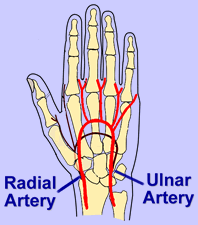 |
While the complication rate with the radial approach is extremely low, there is always some risk with any medical procedure. It is important for patients to discuss the risks and benefits of the femoral vs. radial approaches, as these can vary for each individual.
Limited Utilization in the United States
The more frequent reason that patients are not offered the radial approach is that only a relatively small percentage of interventional cardiologists in the U.S. are trained in the technique. Parts of Europe and Japan do 40% or more of their cases using the radial artery, but in the U.S. estimates are in the low single digits -- although those U.S. cardiologists and radiologists who have learned the radial technique tend to use it for many, if not most, of their patients.
The reasons for this low penetration are several: lack of economic incentive due to the reimbursement structure, lack of patient awareness that this alternative exists, and lack of trained cardiologists. The situation, however, is changing. More and more practices are beginning to see the advantages in lower complication rates, increased patient satisfaction and even cost-savings (complications can be expensive to manage).
The femoral approach has been the gold standard for many years. Moving to the newer radial technique requires specialized training and advanced skills. Training opportunities are increasing as computer simulation models are being developed and a number of hospitals, both in and outside of the U.S. are now offering programs and mentorships. Current signs point to the increasing use of the radial technique in the U.S.
Interested in TransRadial Training? Click Here
Cost-Effectiveness of the Radial versus Femoral Artery Approach to Diagnostic Cardiac Catheterization
Subscribe to:
Posts (Atom)