
Johnson & Johnson (NYSE: JNJ) announced the following Monday:
Unexpected and uncontrollable bleeding is an ongoing challenge for surgeons, including those who perform liver surgery. Based on recent data, the U.S. Food and Drug Administration has approved an additional indication for Ethicon's EVARREST Fibrin Sealant Patch, as an adjunct to hemostasis for control of bleeding during adult liver surgery. EVARREST is a novel convergence of biologics and medical device that rapidly and reliably stops problematic bleeding during surgery on the first attempt in indicated patients.
A problematic bleeding situation—involving bleeding that is more than routine and resistant to conventional means of control—is one of the most threatening complications of surgery1 and a frequent cause of negative patient outcomes, posing significant clinical and economic challenges.2,3 First attempts to control surgical bleeding using current hemostatic agents can fail up to 50 percent of the time.3
"The liver is a particularly hard-to-control bleed site during surgery, as blood loss is often higher and hemostasis may be difficult to achieve," said Krishna Athota, M.D.*, trauma and critical care surgeon at the University of Cincinnati College of Medicine. "This expanded indication for EVARREST reinforces this innovation's potential to make problematic bleeding situations routine, and could result in a paradigm shift in the treatment of bleeding during surgery."
EVARREST is a novel, bioabsorbable hemostat that delivers a powerful combination of hemostatic efficacy, adherence and mechanical strength.4,5,6 The unmatched mechanism of action behind EVARREST drives rapid and durable clot formation by augmenting the human coagulation system. The technology is comprised of a flexible composite patch, which contains embedded human biologics (human thrombin and fibrinogen), which are proteins involved in the natural clotting process.
Clinical studies demonstrate that EVARREST is greater than 94 percent effective in controlling bleeding across challenging patient types and surgical situations, compared to current standard of care (less than 53 percent).7,8,9 EVARREST provides a rapid, predictable solution for problematic bleeding, minimizing surgical procedure disruption.3,7,8
"We see EVARREST as a game changer—better equipping surgeons to handle bleeding, thereby potentially improving patient outcomes, reducing OR costs and providing peace of mind for the entire surgical staff," said Dan Wildman, Vice President of Global Franchise Strategy and Innovation for Ethicon.
EVARREST has been shown to deliver a cost savings compared with current standard of care, when taking into account hemostat cost, OR time, transfusion requirements and retreatment. The low rate of re-bleeding with EVARREST reduces the need for other hemostatic therapies.10
References:
1 Schreiber MA, Neveleff DJ. Achieving hemostasis with topical hemostats: making clinically and economically appropriate decisions in the surgical and trauma settings. AORN J. 2011;94(5):S4-S20.2 Stokes, et al. Impact Of Bleeding-Related Complications And/Or Blood Product Transfusions On Hospital Costs In Inpatient Surgical Patients. BMC Health Services Research 2011, 11:135.3 Data on File, Ethicon, Inc. Global Health Economics and Market Access. EVARREST® Fibrin Sealant Patch. Global Value Dossier Slide Deck.4 Fischer C. et al. A prospective, randomized, controlled trial of the efficacy and safety of fibrin pad as an adjunct to control soft tissue bleeding during abdominal, retroperitoneal, pelvic, and thoracic surgery. J Am Coll Surg. 2013 Sep;217(3):385-93.5 Koea JB, Batiller J, Patel B, et al. A phase III, randomized, controlled, superiority trial evaluating the fibrin pad versus standard of care in controlling parenchymal bleeding during elective hepatic surgery. HPB (Oxford). 2013;15(1):61–70.6 Koea JB. Oral Presentation. 11th E-AHPBA Congress; April 21–24, 2015; Manchester, UK.7 Fischer C. et al. A prospective, randomized, controlled trial of the efficacy and safety of fibrin pad as an adjunct to control soft tissue bleeding during abdominal, retroperitoneal, pelvic, and thoracic surgery. J Am Coll Surg. 2013 Sep;217(3):385-93.8 Koea JB, Batiller J, Patel B, et al. A phase III, randomized, controlled, superiority trial evaluating the fibrin pad versus standard of care in controlling parenchymal bleeding during elective hepatic surgery. HPB (Oxford). 2013;15(1):61–70.9 Koea JB. Oral Presentation. 11th E-AHPBA Congress; April 21–24, 2015; Manchester, UK.10 Corral M et al. Cost Analysis of a Fibrin Sealant Patch for Mild, Moderate and Problematic Soft Tissue Surgical Bleeding: A Hospital Perspective, Cornerstone Research Group.
Showing posts with label J and J. Show all posts
Showing posts with label J and J. Show all posts
Monday, April 6, 2015


Tuesday, January 28, 2014
Baxter sues Johnson & Johnson over FloSeal patents
Baxter (NYSE:BAX) accused Johnson & Johnson (NYSE:JNJ) of infringing 6 patents covering its FloSeal line with the Ethicon SurgiFlo line of competing surgical hemostasis products.
In a lawsuit filed last week in the U.S. District Court for Northern Illinois, Baxter said the alleged infringement is willful and asked Judge Sharon Johnson Coleman for triple damages, pre- and post-judgment interest, legal costs and a jury trial.
"Defendants' SurgiFlo products directly compete with Baxter's biosurgery products, including the Floseal family of products, which practice the Patents-in-Suit. On information and belief, defendants are aware of Floseal's established position in the hemostatic products market and carefully track Baxter's marketing and other activities related to the Floseal products in the United States and worldwide. For example, one or more of Defendants have repeatedly communicated with Baxter regarding competitive marketing issues in the United States and abroad pertaining to Floseal and SurgiFlo," Baxter alleged, according to court documents. "Defendants have infringed and will continue to infringe Baxter's intellectual property rights by making, using, selling, offering for sale within the United States and/or importing into the United States delivery products for hemostasis such as the SurgiFlo family of products."
In a lawsuit filed last week in the U.S. District Court for Northern Illinois, Baxter said the alleged infringement is willful and asked Judge Sharon Johnson Coleman for triple damages, pre- and post-judgment interest, legal costs and a jury trial.
"Defendants' SurgiFlo products directly compete with Baxter's biosurgery products, including the Floseal family of products, which practice the Patents-in-Suit. On information and belief, defendants are aware of Floseal's established position in the hemostatic products market and carefully track Baxter's marketing and other activities related to the Floseal products in the United States and worldwide. For example, one or more of Defendants have repeatedly communicated with Baxter regarding competitive marketing issues in the United States and abroad pertaining to Floseal and SurgiFlo," Baxter alleged, according to court documents. "Defendants have infringed and will continue to infringe Baxter's intellectual property rights by making, using, selling, offering for sale within the United States and/or importing into the United States delivery products for hemostasis such as the SurgiFlo family of products."
Tuesday, November 19, 2013
Sunday, December 16, 2012
J&J's Ethicon recalls blood-stopping hemostat; FDA warns of deadly risk
.jpg)
Johnson & Johnson unit Ethicon is recalling its some of Surgiflo hemostatic kits, warning that a packing issue could lead to breaches in the product, and the FDA has assigned its most serious label to the recall.
Surgiflo is a topical, absorbable hemostat used to stop bleeding in surgical procedures. Ethicon became aware of the packing problem back in the spring and is urging customers to return the affected lots once they're identified. The FDA has branded the affair a Class I recall, saying the recalled products could be rendered non-sterile and their use could to lead to serious injury or death.
Ethicon says it is yet to receive any reports of adverse events from Surgiflo, but the FDA is asking customers to report any problems through its online MedWatch system.
Ethicon has a long history of regulatory dustups, including the costly and deadly vaginal mesh debacle and an October Class I over malfunctioning surgical staplers. However, the company last week won FDA approval for its Evarrest Fibrin Sealant Patch, and J&J has committed to spending $185 million to expand Ethicon's suture-making plant in Athens, GA.
- Here's the FDA's notice
Omrix, a Johnson & Johnson unit, obtains FDA approval for fibrin sealant
Johnson & Johnson (NYSE: JNJ) unit Omrix Biopharmaceuticals Ltd. has obtained US Food and Drug Administration (FDA) approval for its fibrin human sealant patch, one of Omrix's most interest products and the reason why Johnson and Johnson acquired it for $438 million in 2007.
The product, now called Evarrest, is based on Omrix's biological sealant for stopping problematic bleeding during surgery. "Unexpected and uncontrollable bleeding during surgery poses a significant challenge to surgeons, and in some surgical procedures can raise the patient's mortality rate to 20%," says Ethicon Biosurgery (the J&J division which includes Omrix) in its press release.
Omrix's biological sealant is currently used to stop bleeding during surgery or from wounds, but the Evarrest patch Evarrest is easier to use. To stop bleeding, the surgeon places the sealant over the wound and manually compresses it in place for three minutes. The sealant becomes part of the body, gradually degrading over several days or weeks.
The sealant is based on the production of clotting substances in human blood plasma. Ethicon Biosurgery says, "Clinical studies demonstrate that Evarrest is 98% effective in stopping bleeding and maintaining hemostasis compared to the current standard of care at 53%, potentially minimizing disruption to the surgical procedure."
The FDA approval is good news for Johnson & Johnson and for Israel's life sciences industry, and the company will produce Evarrest in Israel, at least over the next few years.
Johnson & Johnson unit Ethicon Inc., which is responsible for hemostasis and sealing solutions to which Omrix belongs, is also considering other options for producing Evarrest and other products later on. It is in talks with Swiss's Octapharma AG, founded by Omrix founder Robert Taub, for this purpose. Omrix was a spin-off of Octapharma, a producer of human plasma products.
In 2009, the State of Israel sued Omrix's founders and Johnson & Johnson for not paying royalties on the acquisition of the intellectual property of the inventor of Omrix's products, a doctor at Sheba Medical Center Tel Hashomer. Omrix and Johnson & Johnson say Omrix was responsible for most of the invention, or that which it received it from Octapharma. The case is still pending, and while it has not yet affected Ormix's thriving operations in Israel to date, it may affect them in the future.
The product, now called Evarrest, is based on Omrix's biological sealant for stopping problematic bleeding during surgery. "Unexpected and uncontrollable bleeding during surgery poses a significant challenge to surgeons, and in some surgical procedures can raise the patient's mortality rate to 20%," says Ethicon Biosurgery (the J&J division which includes Omrix) in its press release.
Omrix's biological sealant is currently used to stop bleeding during surgery or from wounds, but the Evarrest patch Evarrest is easier to use. To stop bleeding, the surgeon places the sealant over the wound and manually compresses it in place for three minutes. The sealant becomes part of the body, gradually degrading over several days or weeks.
The sealant is based on the production of clotting substances in human blood plasma. Ethicon Biosurgery says, "Clinical studies demonstrate that Evarrest is 98% effective in stopping bleeding and maintaining hemostasis compared to the current standard of care at 53%, potentially minimizing disruption to the surgical procedure."
The FDA approval is good news for Johnson & Johnson and for Israel's life sciences industry, and the company will produce Evarrest in Israel, at least over the next few years.
Johnson & Johnson unit Ethicon Inc., which is responsible for hemostasis and sealing solutions to which Omrix belongs, is also considering other options for producing Evarrest and other products later on. It is in talks with Swiss's Octapharma AG, founded by Omrix founder Robert Taub, for this purpose. Omrix was a spin-off of Octapharma, a producer of human plasma products.
In 2009, the State of Israel sued Omrix's founders and Johnson & Johnson for not paying royalties on the acquisition of the intellectual property of the inventor of Omrix's products, a doctor at Sheba Medical Center Tel Hashomer. Omrix and Johnson & Johnson say Omrix was responsible for most of the invention, or that which it received it from Octapharma. The case is still pending, and while it has not yet affected Ormix's thriving operations in Israel to date, it may affect them in the future.
Sunday, December 9, 2012
J&J's EVARREST Fibrin Sealant Patch Approved by FDA
Ethicon Biosurgery, Division of Ethicon, Inc., a worldwide leader in hemostasis and sealing solutions, announced today that the U.S. Food and Drug Administration (FDA) has approved EVARREST™ Fibrin Sealant Patch, a novel product that rapidly and reliably aids in stopping problematic bleeding during surgery. Unexpected and uncontrollable bleeding during surgery poses a significant challenge to surgeons, and in some surgical procedures can raise the patient's mortality rate to 20%.
EVARREST™ has been indicated for use with manual compression as an adjunct to hemostasis for soft tissue bleeding during open retroperitoneal, intra-abdominal, pelvic and non-cardiac thoracic surgery, when control of bleeding by standard surgical methods of hemostasis (e.g., suture, ligature, cautery) is ineffective or impractical. It is not for use in children under one month of age and it cannot safely or effectively be used in place of sutures or other forms of mechanical ligation in the treatment of major arterial or venous bleeding.
"The FDA approval of EVARREST™ is a significant milestone in advancing patient care. We believe this technology has the potential to drive a paradigm shift in the treatment of problematic bleeding during surgery," said Dan Wildman, Worldwide President, Ethicon Biosurgery. "EVARREST™ combines the company's expertise in biomaterials and plasma-derived biologics to bring true innovation to surgeons and their patients."
EVARREST™ consists of a coating of biologics and a flexible patch that, when combined, form a distinct delivery system that will raise the standard of care for surgeons and their patients. Each component of EVARREST™ ^ plays an active role in the hemostasis process -- the biologics (human thrombin and fibrinogen) react and initiate a fibrin clot, which then integrate into the patch, providing mechanical support and adherence to the wound site.
To use the product, surgeons place EVARREST™ upon the bleeding wound surface and apply manual compression for approximately three minutes. EVARREST™ remains in the patient's body once surgery has been completed as it is fully bio-absorbable.
Sunday, August 26, 2012
FDA: J&J Unit (Synthes) Recalls Potentially Flammable Bone Putty
.jpg)
The Hemostatic Bone Putty is used to stop bone bleeding by creating a physical barrier along the edges of bones damaged by trauma or cut during a surgical procedure.
The recall, which has been classified as Class I, or the most serious type of recall, was initiated on July 5.
Synthes had issued a medical device recall letter on July 5 requesting medical facilities to examine their inventory and immediately stop using the identified part and lot numbers of the putty manufactured between July 6, 2011 and December 14, 2011.Synthes has been in the news for all the wrong reasons, Symthes is unusual in that it is one of a few cases in which company execs have been sentenced to a term of imprisonment for a misdemeanor violation of the Food, Drug and Cosmetic Act. The individual defendants, by virtue of their jobs, were “responsible corporate officers” at various time during the circumstances surrounding the clinical trial that was described in the indictment.
And what exactly took place? From May 2002 until fall 2004, a Synthes subsidiary called Norian, as well as Synthes and the former execs, ran unauthorized trials of their Norian XR and Norian SRS devices, which were bone cements used in surgeries to treat vertebral compression fractures of the spine, or VCR, a painful condition commonly suffered by the elderly, according to the feds.
The surgeries were performed despite a warning on the FDA labeling for Norian XR that cautioned against this use, and in the face of serious medical concerns about the safety of the devices when used in the spine, according to the feds. But they apparently disregarded the warnings. For instance, the feds say that, before the marketing program began, pilot studies showed the bone cement reacted chemically with human blood in a test tube to cause blood clots. The research conducted in a pig also showed that such cement-caused clots became lodged in the lungs.
Just the same, the Synthes gang marketed the device for VCFs without conducting testing that needed FDA approval, the marketing did not stop until after a third patient had died on the operating table.The trials were conducted at various US hospitals and selected surgeons were approached during so-called ‘Test Market Kick-Off’ meetings and a forum in 2003 and early 2004, according to the feds, who say about 52 spine surgeons were trained.
What’s more, after the death of that third patient in January 2004, they did not recall Norian XR from the market – which would have required them to disclose details of the three deaths to the FDA, according to the feds. Instead, they “compounded their crimes by carrying out a coverup in which they made false statements to the FDA during an official inspection in May and June 2004.” However since the purchase by J&J, it is J&J who now hold the legal burden.
To date:

2011 - Three executives from Synthes, a device maker that was recently purchased by Johnson & Johnson, were sentenced to prison for their roles in an unapproved trial of a bone-cement drug that led to three patient deaths. All four plead guilty to one misdemeanor count of shipping an adulterated and misbranded product in interstate commerce.Thomas Higgins, 55, a former president of the Synthes spine division, and Michael Huggins, 54, a former president of Synthes North America, were each sentenced to nine months. John Walsh, 48, who was director of regulatory and clinical affairs, was sentenced to five months. Richard Bohner, 57, sentenced at a later date to 8 months. Each must also pay a $100,000 fine.
Feb, 2012 - FDA Warning Letter
Latest 2012 - FDA: J&J Unit Recalls Potentially Flammable Bone Putty
Friday, November 18, 2011
JnJ Q3 2011
I will now review the Medical Devices & Diagnostics segment results.
Worldwide Medical Devices & Diagnostics segment sales of $6.3 billion grew 1.7% operationally as compared to the same period in 2010. Currency had a positive impact of 4.4 points, resulting in a total sales increase of 6.1%.
Sales in the U.S. were down 0.7%, while sales outside the U.S. increased on an operational basis by 3.9%. Excluding drug-eluting stent, worldwide sales increased over 3% on an operational basis.....During the quarter, Ethicon received a complete response letter from the U.S. Food and Drug Administration regarding its Biologics License Application or BLA for the Fibrin Pad. The Fibrin Pad is a novel product candidate that combines Ethicon to biomaterials and plasma-derived Biologics to aid in stopping bleeding during surgery. This BLA marks the first of multiple submissions and approvals the company will pursue to deliver this novel product to surgeons and their patients. We are not planning on conducting new clinical trials to support our response. Ethicon is taking a phased approach to the development of the Fibrin Pad, including building a state-of-the-art facility to scale up supply in order to meet anticipated demand.
Ethicon Endo-Surgery achieved operational growth of 3.4% in the third quarter of 2011, with the U.S. sales down 2.5% and sales outside the U.S. up 7.6% operationally. Growth was driven by increased market share for advanced sterilization products and outside the U.S., new product launches and the continued shift to minimally-invasive surgery drove double-digit growth for harmonic products and strong sales results for Endo products....
Steve Beuchaw - Morgan Stanley, Research Division
We'd always be happy to join you in any of those discussions. One other question. I just wanted to get your latest thoughts, Dominic, on where things are headed with the FDA approval processes, both the 5, 10-Ks in for novel technologies. On one hand it seems like we're seeing an acceleration of legislative activity aimed at making these processes simpler, but then on the other hand we see CMS and the FDA working harder to coordinate approval and reimbursement for new technologies. So at this stage, to what extent do you think these are good indicators of where things might go? Maybe 5, 10-Ks get more predictable, and new technologies get a little bit more scrutiny. Where do you see this going?
Dominic J. Caruso
Yes, it's a great question. Look, we would just be speculating if we gave you sort of any definitive kind of position on this. But it is true that there is a movement to try to differentiate, if you will, the products that should get 5, 10-K and rapid approval in the marketplace because of relatively low risk or they're obviously the predicate devices. It's something that should be comparable to the current device and differentiate those from the products that would require more sort of PMA and extensive clinical trials as the products become or those development innovations become more complex. I think a company like Johnson & Johnson having the expertise that we have across a broad portfolio of not only medical device products, but obviously our pharmaceutical business as well positions us very well to have those kinds of discussions and dialogue with the FDA of what's appropriate in evaluating the particular product in question. So I would just say you've made a good observation. I can't predict where it's going to come or how it's going to come out, but I believe that we're in a great position to have that dialogue with the FDA and help them arrive at a sensible solution for the industry.
Tuesday, August 9, 2011
LifeBond, an Israeli maker of biosurgical products, raised over $20 million in a third round of financing led by Giza Venture Capital and Aurum Ventures, with Johnson & Johnson Development Corp joining the process
Johnson & Johnson (NYSE: JNJ) has invested in biological sealant developer Lifebond Ltd. as part of the company's $20 million third financing round. Giza Venture Capital and Aurum Ventures MKI Ltd. are leading the round alongside current investors Pitango Venture Capital, GlenRock Israel, the Zitelman Group, and Lifebond co-chairman Robert Taub.
Johnson & Johnson acquired Omrix Biopharmaceuticals, which Taub founded, for $425 million in 2006. It is interesting to see that Johnson & Johnson is investing in another company, which like Omrix, is developing a biological sealant.
Lifebond's flagship product is a surgical sealant for tissue after surgery to shorten the bowel. It partly competes with Omrix, and it seems that both Taub and Johnson & Johnson believe that Lifebond's products are as good as Omrix's products, but which Omrix's technology cannot produce.
Lifebond CEO Ishay Attar and COO Orahn Preiss-Bloom co-founded Lifebond in 2007, in the aftermath of the 2006 Second Lebanon War in order to develop next-generation would closure solutions for soldiers on the battlefield.
Lifebond will use proceeds from the financing round to complete preclinical trials of its LifeSeal sealant product to prevent life-threatening blood and fluid leakage from the intestine during surgery. Trials for LifeSeal for intestinal surgery under US Food and Drug Administration (FDA) will use premarket approval (PMA) protocols, the longer protocol for medical devices. Lifebond believes that it can bring the product to market within two years.
Lifebond is also developing hemostats that are in early clinical trials and a product to prevent hernias.
Johnson & Johnson acquired Omrix Biopharmaceuticals, which Taub founded, for $425 million in 2006. It is interesting to see that Johnson & Johnson is investing in another company, which like Omrix, is developing a biological sealant.
Lifebond's flagship product is a surgical sealant for tissue after surgery to shorten the bowel. It partly competes with Omrix, and it seems that both Taub and Johnson & Johnson believe that Lifebond's products are as good as Omrix's products, but which Omrix's technology cannot produce.
Lifebond CEO Ishay Attar and COO Orahn Preiss-Bloom co-founded Lifebond in 2007, in the aftermath of the 2006 Second Lebanon War in order to develop next-generation would closure solutions for soldiers on the battlefield.
Lifebond will use proceeds from the financing round to complete preclinical trials of its LifeSeal sealant product to prevent life-threatening blood and fluid leakage from the intestine during surgery. Trials for LifeSeal for intestinal surgery under US Food and Drug Administration (FDA) will use premarket approval (PMA) protocols, the longer protocol for medical devices. Lifebond believes that it can bring the product to market within two years.
Lifebond is also developing hemostats that are in early clinical trials and a product to prevent hernias.
Wednesday, July 20, 2011
J and J, Q2 2011
We've been driving well above market growth in our biosurgicals platform through new products like the SURGIFLO Hemostatic Matrix Kit, one of the first product launches resulting from our 2008 acquisition of Omrix Biopharmaceuticals. We've also driven growth to the rapid globalization of the EVICEL Fibrin Sealant also acquired from Omrix. When we acquired Omrix, EVICEL is available in 1 country, Omrix's home country, Israel. But by the end of 2009, the product was available in 10 countries. And at present, we're at the 21 countries....
So let's start by taking a look at the overall MD&D market and what we're seeing. We continue to believe this market has solid long-term growth potential due to a number of tailwinds that you see on the left-hand side of this slide. I'll highlight each briefly. First, populations in the developed world are aging rapidly. In large countries like Japan, Germany and Italy, more than 20% of the total population is already over 65 years of age. That percentage is rising rapidly in other developed nations, including the U.S., with a first of approximately 77 million baby boomers began turning 65 this year at the astonishing rate of 1 person every 8 seconds. As most of us know from personal experience, we consume more healthcare as we grow older. In fact, those over the age of 65 consume an average of 7 times more healthcare per year than those under the age of 65.
A second tailwind is the growing demand for healthcare that we're seeing in emerging markets. China, for example, has lifted more than 400 million people out of poverty in the last 20 years. As standards of living rise, people increasingly expect and are able to afford better healthcare.
A third tailwind is the fact that significant unmet medical needs remain in both the developed and the developing world. The diseases that our products help treat, osteoarthritis, cardiovascular disease, diabetes, presbyopia, obesity, affect hundreds of millions of people today with prevalence rates that are on the rise globally.
Finally, we live in a time of tremendous scientific and technological progress. I was in Asia just a few weeks ago and had the pleasure of visiting with the number of high-tech companies outside of the healthcare industry. When you think about the advances that are being made in terms of our understanding of disease, and you couple that with some of the incredible new technologies that are being developed, it's a very exciting time to be in our space.
Sunday, April 10, 2011
Unethical Device Sales Activities Exposed - Corporate Goals 1, Patient Safety 0
The healthcare giant was charged by the US Securities and Exchange Commission with violating the Foreign Corrupt Practices Act by bribing public doctors in several European countries - and paying kickbacks to Iraq - to illegally obtain business. The FCPA forbids US companies from bribing foreign government officials (read here).
Specifically, various Johnson & Johnson (JNJ) units paid bribes to public doctors in Greece who chose J&J surgical implants; public doctors and hospital administrators in Poland who awarded contracts to J&J, and public doctors in Romania to prescribe J&J meds. The subsidiaries - including DePuy and Janssen Pharmaceutica - also paid kickbacks to Iraq to obtain 19 contracts under the United Nations Oil for Food Program, according to the SEC complaint (pdf).
To settle charges, J&J agreed to pay $48.6 million in disgorgement and prejudgment interest, and another $21.4 to settle parallel criminal charges that were announced by the US Department of Justice. Meanwhile, J&J is also paying $8 million to resolve an investigation by the United Kingdom Serious Fraud Office into its DePuy unit (see this).
Why did the docs agree? The doctors and administrators working for public entities in Greece, Poland, and Romania, who ordered or prescribed J&J products, were rewarded with cash and inappropriate travel, among other goodies. And J&J subsidiaries, employees and agents used slush funds, sham civil contracts with doctors, and off-shore companies in the Isle of Man to carry out the bribery.
The charges are not a huge surprise, however. Last summer, the feds announced they have begun paying closer attention to interactions between the pharmaceutical industry and foreign governments (background). And several months ago, at least five big drugmakers received letters as the federal government seeks to uncover any violations of the FCPA.

Four years ago, by the way, the healthcare giant made a “voluntary disclosure” to US authorities about improper payments, which were made by unspecified foreign subsidiaries in connection with the sale of medical devices in a pair of unnamed countries. And the worldwide chairman of medical devices and diagnostics retired (read this). In this disclosure, the SEC noted that J&J also conducted an internal probe, according to an SEC statement.
"The Justice Department “will be intensely focused on rooting out foreign bribery in your industry. That will mean investigation and, if warranted, prosecution of corporations, to be sure, but also it will involve investigation and prosecution of senior executives,” Breuer told the crowd, adding that individuals will be held accountable, according to The Legal Times.
“I don’t care if you’re a physician and I don’t care if you’re the clerical worker. It has to do with what you do. But if you do it, your MD degree is not going to be a shield,” Breuer said. Overall, he said, the Justice Department is pursuing more than 120 FCPA investigations in cooperation with the FBI and the Securities and Exchange Commission.
And Tony West, an assistant attorney general and chief of the department’s Civil Division, noted that he recently told the Senate Judiciary Committee that enforcement will not be limited to companies."
Friday, November 19, 2010
Ethicon Inc announces submission of BLA for Fibrin Pad
Ethicon Inc, a Johnson & Johnson (NYSE: JNJ) company, reported on Thursday the submission of a Biologic License Application (BLA) to the US Food and Drug Administration (FDA) for the Fibrin Pad to aid in stopping soft tissue bleeding during surgery.
The company's BLA submission includes efficacy and safety data from a randomised, controlled clinical study in which the Fibrin Pad was used as an adjunct to hemostasis in soft tissue bleeding. According to Ethicon the Fibrin Pad is a novel product candidate that combines two methods of action: biomaterials and plasma-derived biologics (Human Fibrinogen and Human Thrombin).The Fibrin Pad is intended for use by surgeons as an adjunct to hemostasis when surgical methods are ineffective or impractical to control bleeding.
Wednesday, July 21, 2010
Johnson & Johnson Q2 2010 with commentary on EU Pricing Impact
Ethicon worldwide sales grew operationally by 8.2% with the U.S. up over 12.65%, and sales outside the U.S. up 5% operationally. Growth was driven by sutures, biosurgicals and Mentor products. Additionally, the acquisitions of Acclarent this year, contributed to the growth in the quarter. Ethicon Endo-Surgery achieved operational growth of 6.6% in the second quarter of 2010, with the U.S. sales growing 3.7% and sales outside the U.S. up with an operational basis by 8.8%. Growth was driven by of the Advanced Sterilization, Endo and HARMONIC products.
Frederick Wise – Leerink Swann LLC
OK, thank you. Next, Dominic, obviously, you're talking about the increased EU price pressures. Maybe I missed it, but during the Medical Device Day in early June, it seemed like you all hadn't seen it yet. Can you give us a little more color on what you're seeing, how you're seeing it? And obviously you're talking about the sort of an accelerating impact for the rest of this year, is this something we should be concerned about accelerating further into 2011 and beyond?
Dominic Caruso
Right, Rick. That's a great question. So, let me just be clear on the EU pricing pressure that we're seeing. They're much more significant in the Pharmaceutical business than they are in the Medical Device business. If you've been – I'm sure you've been following the various governmental austerity programs that include price reduction; those price reductions are specifically directed towards Pharmaceutical products where those governments have much more of an active role in pricing in those types of products.
With respect to the Medical Device business, that business is characterized quite differently than the Pharmaceutical business. It's characterized by largely a DRG system and largely a tender system. So, we have not yet seen much of an impact at all on pricing and medical devices. We do expect that it may begin to show up later in the year or into next year. But of the estimates that I gave you earlier of approximately $200 million from increased acceleration of pricing pressures in Europe, that is largely in the Pharmaceutical business, not in the Medical Device space.
Frederick Wise – Leerink Swann LLC
OK, thank you. Next, Dominic, obviously, you're talking about the increased EU price pressures. Maybe I missed it, but during the Medical Device Day in early June, it seemed like you all hadn't seen it yet. Can you give us a little more color on what you're seeing, how you're seeing it? And obviously you're talking about the sort of an accelerating impact for the rest of this year, is this something we should be concerned about accelerating further into 2011 and beyond?
Dominic Caruso
Right, Rick. That's a great question. So, let me just be clear on the EU pricing pressure that we're seeing. They're much more significant in the Pharmaceutical business than they are in the Medical Device business. If you've been – I'm sure you've been following the various governmental austerity programs that include price reduction; those price reductions are specifically directed towards Pharmaceutical products where those governments have much more of an active role in pricing in those types of products.
With respect to the Medical Device business, that business is characterized quite differently than the Pharmaceutical business. It's characterized by largely a DRG system and largely a tender system. So, we have not yet seen much of an impact at all on pricing and medical devices. We do expect that it may begin to show up later in the year or into next year. But of the estimates that I gave you earlier of approximately $200 million from increased acceleration of pricing pressures in Europe, that is largely in the Pharmaceutical business, not in the Medical Device space.
Wednesday, July 7, 2010
Ethicon, Inc. Expands Hemostasis Product Portfolio with Approval of the Company's First Synthetic Internal Use Sealant
SOMERVILLE, N.J., July 7, 2010 /PRNewswire via COMTEX/ -- Ethicon, Inc., a worldwide leader in surgical care, announced today the introduction of ETHICON(TM) OMNEX(TM) Surgical Sealant, ETHICON(TM) Biosurgery's first synthetic sealant designed to achieve adjunctive hemostasis (stoppage of bleeding) in vascular reconstructions by mechanically sealing areas of leakage. The US Food and Drug Administration (FDA) recently granted approval of the Premarket Approval Application (PMA) for ETHICON(TM) OMNEX(TM) Surgical Sealant.
ETHICON(TM) OMNEX(TM) creates a strong, flexible physical seal independent of the body's clotting mechanisms. It is proven in an ex-vivo model to be two-to-four times as strong as other surgical sealants, is ready for use in less than 30 seconds, and proven to seal to ePTFE grafts and bond securely to friable vessels.(1)
"A basic rule of patient safety and excellent outcomes is to prevent unnecessary bleeding during and immediately after surgery," said Alan B. Lumsden MD, Medical Director of the Methodist DeBakey Heart & Vascular Center and the Chairman of the Department of Cardiovascular Surgery at The Methodist Hospital in Houston.* "The availability of an effective surgical sealant such as ETHICON(TM) OMNEX(TM) provides surgeons with a valuable new tool that is clinically proven to decrease the time it takes to seal the surgical site, including ePTFE grafts, and prevent leakage from occurring."ETHICON(TM) OMNEX(TM) is clinically proven to significantly decrease time to hemostasis based on clinical trials conducted to support its safety and effectiveness. Specifically, results from a pivotal, randomized, controlled, open-label, multi-center trial of 151 patients at 13 centers in the United States and European Union demonstrated that ETHICON(TM) OMNEX(TM) provided hemostasis three times faster than oxidized regenerated cellulose at a rate of 1.99 minutes vs 6.73 minutes, with 54 percent of the ETHICON(TM) OMNEX(TM) patients receiving immediate hemostasis.(2) There were no significant differences in adverse events compared to oxidized regenerated cellulose during the study time period and 4+ year follow-up analysis.(2)
ETHICON(TM) OMNEX(TM) Surgical Sealant has proven efficacy in a broad spectrum of vascular reconstructive procedures including arteriovenous access, aortobifemoral bypass, femoral popliteal bypass, endarterectomy, abdominal aortic aneurysm and aortotomies.(1)
ETHICON(TM) OMNEX(TM) Surgical Sealant is contraindicated in patients with known hypersensitivity to cyanoacrylate or formaldehyde. The device is not for intravascular use. ETHICON(TM) OMNEX(TM) Surgical Sealant is intended for use as an adjunctive sealant and is not to be used in place of sutures, staples, or mechanical closure.
ETHICON(TM) OMNEX(TM) creates a strong, flexible physical seal independent of the body's clotting mechanisms. It is proven in an ex-vivo model to be two-to-four times as strong as other surgical sealants, is ready for use in less than 30 seconds, and proven to seal to ePTFE grafts and bond securely to friable vessels.(1)
"A basic rule of patient safety and excellent outcomes is to prevent unnecessary bleeding during and immediately after surgery," said Alan B. Lumsden MD, Medical Director of the Methodist DeBakey Heart & Vascular Center and the Chairman of the Department of Cardiovascular Surgery at The Methodist Hospital in Houston.* "The availability of an effective surgical sealant such as ETHICON(TM) OMNEX(TM) provides surgeons with a valuable new tool that is clinically proven to decrease the time it takes to seal the surgical site, including ePTFE grafts, and prevent leakage from occurring."ETHICON(TM) OMNEX(TM) is clinically proven to significantly decrease time to hemostasis based on clinical trials conducted to support its safety and effectiveness. Specifically, results from a pivotal, randomized, controlled, open-label, multi-center trial of 151 patients at 13 centers in the United States and European Union demonstrated that ETHICON(TM) OMNEX(TM) provided hemostasis three times faster than oxidized regenerated cellulose at a rate of 1.99 minutes vs 6.73 minutes, with 54 percent of the ETHICON(TM) OMNEX(TM) patients receiving immediate hemostasis.(2) There were no significant differences in adverse events compared to oxidized regenerated cellulose during the study time period and 4+ year follow-up analysis.(2)
ETHICON(TM) OMNEX(TM) Surgical Sealant has proven efficacy in a broad spectrum of vascular reconstructive procedures including arteriovenous access, aortobifemoral bypass, femoral popliteal bypass, endarterectomy, abdominal aortic aneurysm and aortotomies.(1)
ETHICON(TM) OMNEX(TM) Surgical Sealant is contraindicated in patients with known hypersensitivity to cyanoacrylate or formaldehyde. The device is not for intravascular use. ETHICON(TM) OMNEX(TM) Surgical Sealant is intended for use as an adjunctive sealant and is not to be used in place of sutures, staples, or mechanical closure.
Wednesday, June 16, 2010
Animal Products
Following on from the Bleeding Calf Syndrome posting available HERE and other postings available Here regarding risks of animal sourced products.
I have provided further info above provided by DEFRA. To the best of my knowledge only the UK and Scotland are acting to investigate?
You can follow this link for further details also 'This intriguing disease captures the imagination. The VLA will be working with others to help discover the cause.'
I expect manufacturers will focus efforts on recombinant, plant-based technologies.
While our industry battles achieving financial success in the market with the ideal of creating an agent that is:
- of minimized risk
- efficaious
- cost effective,
- easily deliverable
- and applicable to multiple surgeries
The removal of King Pharmaceuticals crown as leader in the multi- $million Thrombin market by Zymogenetics is
a sure indicator as to market preference and acceptance of these benefits. J&J have a human sourced Thrombin following theirpurchase of Omrix.
Certainly reconstituted animal based technologies are facing severe threats currently as the link between zoonotic diseases (animal/human transfer) become more widely known. While BNP (Bleeding Calf Syndrome) transmission is far from clear it should be of concern. The lack of reporting and individual Government action highlight the inadequacies of public protection even with a cursory investigation.
While Bleeding Calf Syndrome may not pose infection risks via medical devices it exemplifies the public vulnerabilities to weak protection measures from their Governments. This is weak response and is exactly the response delivered that saw vCJD, and Prion borne infections escalate. Harvesting Bovine Materials HERE
Thursday, June 3, 2010
J&J comment on EU market and the US release of Fibrin Pad
Johnson & Johnson's (JNJ) big medical devices and diagnostics unit anticipates that pressure on product prices in Europe will rise over the long term but not immediately, the unit's top official said Thursday.
J&J also said it expects the portion of the $350 billion devices and diagnostics market it competes in to grow at a faster rate than the overall market.
Additionally, the company anticipates that unit will make about 80 "significant" regulatory filings between 2010 and 2010.
J&J, which is dealing with fallout from the recent recall of children's medicines, is holding an all-day review Thursday for the devices and diagnostics unit. That unit grew sales by 2% to $23.6 billion last year and became J&J's largest segment, eclipsing a pharmaceutical business that has been pressured by competition from generic drugs.
The segment derived more than half of its sales last year from outside the U.S. A big question for device and drug companies these days is how the European debt crisis will affect product prices as governments try to rein in health spending.
"I think longer term we clearly see there being increased pricing pressure," Alex Gorsky, worldwide chairman for J&J's devices and diagnostics unit, said during the meeting. But there are reasons to believe it won't be an "immediate" issue, and doesn't mirror the situation with drug prices, he said.
These reasons include the tendering systems used to purchase devices and the dynamics between hospitals and governments, he said.
Pricing in Europe remained a top issue when analysts asked questions. Gorsky told them the pricing issue is difficult to forecast. He also said J&J hasn't seen a slowdown in procedure volumes that could also impact sales, but added "we'll have to watch closely."
Healthcare company Johnson & Johnson (JNJ), Thursday revealed growth strategies and product pipeline information for its Medical Devices & Diagnostics Segment. The company said the segment was its largest, and that new products and acquisitions would help sustain its market-leading position in the $350 billion, worldwide medical device and diagnostics market.
The New Brunswick, New Jersey-based company provided information on products that have been launched already or are on the anvil for the current fiscal, from its seven global franchises.
Ethicon Endo-Surgery, a maker of surgical device solutions for minimally invasive and open surgery; and Advanced Sterilization Products is rolling out a host of new products, J&J said. They include new energy instruments as part of its HARMONIC family of technology that delivers precise ultrasonic energy to minimize thermal tissue damage to the patient, while providing surgical efficiency.
Further, Ethicon continued to focus on patient comfort and surgeon ease-of-use as it built its portfolio of hernia repair products with ETHICON PHYSIOMESH Flexible Composite Mesh and its first entry into the hernia mesh fixation market with ETHICON SECURESTRAP 5mm Strap Fixation Device.
Ethicon Endo-Surgery would make a BLA filing in the U.S for its Fibrin Pad in the fourth quarter. The product combines two biomaterials and two biologics to stop bleeding during surgical procedures.
J&J also said it expects the portion of the $350 billion devices and diagnostics market it competes in to grow at a faster rate than the overall market.
Additionally, the company anticipates that unit will make about 80 "significant" regulatory filings between 2010 and 2010.
J&J, which is dealing with fallout from the recent recall of children's medicines, is holding an all-day review Thursday for the devices and diagnostics unit. That unit grew sales by 2% to $23.6 billion last year and became J&J's largest segment, eclipsing a pharmaceutical business that has been pressured by competition from generic drugs.
The segment derived more than half of its sales last year from outside the U.S. A big question for device and drug companies these days is how the European debt crisis will affect product prices as governments try to rein in health spending.
"I think longer term we clearly see there being increased pricing pressure," Alex Gorsky, worldwide chairman for J&J's devices and diagnostics unit, said during the meeting. But there are reasons to believe it won't be an "immediate" issue, and doesn't mirror the situation with drug prices, he said.
These reasons include the tendering systems used to purchase devices and the dynamics between hospitals and governments, he said.
Pricing in Europe remained a top issue when analysts asked questions. Gorsky told them the pricing issue is difficult to forecast. He also said J&J hasn't seen a slowdown in procedure volumes that could also impact sales, but added "we'll have to watch closely."
Healthcare company Johnson & Johnson (JNJ), Thursday revealed growth strategies and product pipeline information for its Medical Devices & Diagnostics Segment. The company said the segment was its largest, and that new products and acquisitions would help sustain its market-leading position in the $350 billion, worldwide medical device and diagnostics market.
The New Brunswick, New Jersey-based company provided information on products that have been launched already or are on the anvil for the current fiscal, from its seven global franchises.
Ethicon Endo-Surgery, a maker of surgical device solutions for minimally invasive and open surgery; and Advanced Sterilization Products is rolling out a host of new products, J&J said. They include new energy instruments as part of its HARMONIC family of technology that delivers precise ultrasonic energy to minimize thermal tissue damage to the patient, while providing surgical efficiency.
Further, Ethicon continued to focus on patient comfort and surgeon ease-of-use as it built its portfolio of hernia repair products with ETHICON PHYSIOMESH Flexible Composite Mesh and its first entry into the hernia mesh fixation market with ETHICON SECURESTRAP 5mm Strap Fixation Device.
Ethicon Endo-Surgery would make a BLA filing in the U.S for its Fibrin Pad in the fourth quarter. The product combines two biomaterials and two biologics to stop bleeding during surgical procedures.
Monday, May 24, 2010
Hemostasis Blog Valued Resource!
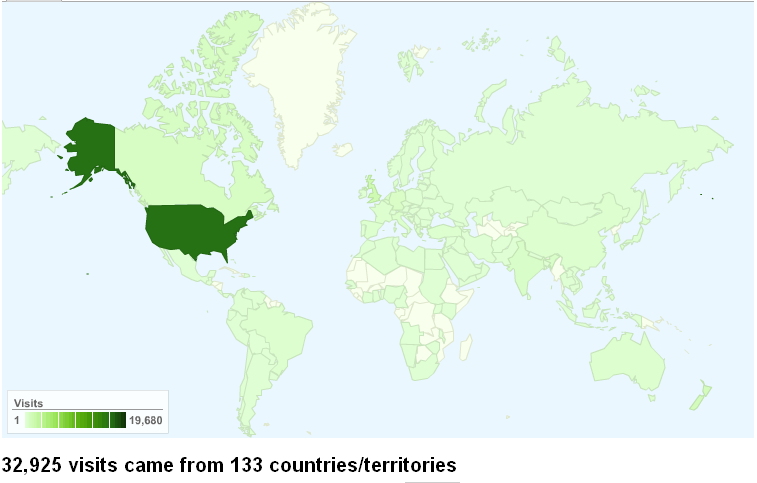 The Medical Hemostat Blog has gained wide geographical and company interest. You are welcome to contact me at hemostatguy@gmail.com. I also have consulted with market research firms such as Frost and Sullivan amongst other research organisations.
While I address a need for comprehensive information regarding hemostasis, I am pleased to announce our top, google analytics identified company visitors:
- Johnson & Johnson
- CryoLife
- Baxter
- Trauma Cure
- Tyco
- Zymogenetics
- Medafor
- Hemcon
- King Pharmaceuticals
- Entegrion
- St. Jude
- Aventis Behring
Thank You for following the Blog.
HG
Friday, May 14, 2010
Ethicon Endo-Surgery Introduces Two New Staplers for Open Surgical Procedures at ASCRS

MINNEAPOLIS, May 14 /PRNewswire/ -- Ethicon Endo-Surgery (EES) today announced the launch of two new surgical staplers designed to optimize efficiencies and compression during open surgery. The Ethicon Endo-Surgery Linear Cutter 55/75, engineered with novel staple technology and selectable staple heights in one cartridge, provides superior hemostasis(i) for patients and improved efficiencies to surgeons, nurses and facility administrations. The Ethicon Endo-Surgery Intraluminal Stapler (ILS), designed with a new tissue compression scale, provides surgeons improved flexibility and control so that they can address the individual needs of each patient. The products, which are the latest additions to the company's portfolio of solutions for colorectal surgery, will be featured at the Annual Meeting of the American Society of Colon and Rectal Surgeons (ASCRS), May 15-19, 2010 inMinneapolis.
Both surgical staplers were designed in collaboration with surgeons to be used in colorectal, bariatric and general procedures. The new products address the variability of tissue compression. Tissue compression—or the measurement of tissue density—prior to stapling is required with all surgical staplers to reliably deliver a staple line with proper staple formation. The optimal amount of compression is variable and affected by multiple factors such as the type, condition and thickness of targeted tissue. Tissue may vary in thickness and compressibility from patient to patient, as well as within an individual's GI tract. This variability extends to the amount of compression needed for effective hemostasis.
"The importance of stapling is a critical aspect of surgery that should not be underestimated. There are several variables that must be taken into account—sometimes during the procedure— in order to prevent post-surgical complications such as hemostasis," said Larry Sasaki, M.D.* at North Louisiana Surgery Center & Louisiana State University School of Medicine at Shreveport. "Advancements in stapling technology that secure tissue better and give surgeons the ability to make adjustments during the procedure based on varying tissue conditions is a welcome improvement over previous stapling instrumentation available for open surgery."
The EES Linear Cutter 55/75 (available in 55mm and 75mm lengths) employs an innovative and novel 3-D staple technology, which produces angled, parallel staple legs that overlap, unlike traditional surgical staples. In addition, the EES Linear Cutter 55/75 staples are deployed in a row of six instead of four. These innovations produce a unique staple line, delivering optimal tissue compression and superior hemostasis(i). The new EES Linear Cutter is also enhanced with:
- a single cartridge that contains three different staple heights, enabling surgeons to select staple height during surgery – based on the individual tissue thickness of the patient - without switching cartridges.
- an intermediate locking mechanism which allows for easier, one-handed tissue manipulation, allowing surgeons to gently interact with tissue.
Friday, February 12, 2010
JnJ 2009 Earnings Call January 2010
We received FDA approval in October for the SURGIFLO Hemostatic Matrix chip, an advanced flowable hemostat for use in a broad range of surgical procedures. This is our first product launch resulting from Ethicon’s 2008 acquisition of Omrix. The regulatory knowledge gained from this combination product will be valuable as we continue to develop and commercialize other combination products in our pipeline like the Fibrin Pad, which I will address in a minute.......
As I mentioned earlier, Johnson & Johnson leads the industry in developing next-generation advanced hemostats to address the persistent clinical problems associated with bleeding in surgical settings, and we are very excited by the potential of the Fibrin Pad. With our human-plasma based biologics embedded directly into a proprietary matrix, the Fibrin Pad has the potential to uniquely and effectively address bleeding challenges that are hardly unmet by traditional hemostats. As Louise mentioned earlier, the BLI filing for the Fibrin Pad is now expected in the first half of this year.
And obviously, the best thing is to take the $7 billion we are investing and be able to generate products like Simponi or Stelara or Sedasys or the Fibrin Pad. Like, if we see other opportunities to license or to partner, partner may be an even more strategic investment than just a license. But, we will continue to take advantage of each of those in the areas where we see again the biggest opportunities for growth in the corporation.
As I mentioned earlier, Johnson & Johnson leads the industry in developing next-generation advanced hemostats to address the persistent clinical problems associated with bleeding in surgical settings, and we are very excited by the potential of the Fibrin Pad. With our human-plasma based biologics embedded directly into a proprietary matrix, the Fibrin Pad has the potential to uniquely and effectively address bleeding challenges that are hardly unmet by traditional hemostats. As Louise mentioned earlier, the BLI filing for the Fibrin Pad is now expected in the first half of this year.
And obviously, the best thing is to take the $7 billion we are investing and be able to generate products like Simponi or Stelara or Sedasys or the Fibrin Pad. Like, if we see other opportunities to license or to partner, partner may be an even more strategic investment than just a license. But, we will continue to take advantage of each of those in the areas where we see again the biggest opportunities for growth in the corporation.
Wednesday, October 14, 2009
J 'n J Q3 - Edited
Ethicon worldwide sales grew operationally by 9.4% with US up 18% and sales outside the US up 3.8% operationally. The acquisitions of Mentor and Omrix partially offset by the divestiture of the professional wound care business added approximately 3.5 points to the worldwide operational growth. Sales for our newly acquired aesthetics products for Mentor were in line with 2008. On a worldwide basis double digit operational growth was achieved in biosurgicals and meshes.
Johnson & Johnson leads the industry in developing and next generation of advanced hemostats to address the persistent clinical problems associated with bleeding in surgical settings. A truly unique example of convergence three Johnson & Johnson companies; Ethicon, [Senacore], and the recently acquired Omrix Biopharmaceuticals have been working together to develop one such hemostat that we call the Fibrin pad.
With our heman plasma based biologics embedded directly into proprietary matrix the fibrin pad has the potential to uniquely and effectively dress bleeding challenges that are currently unmet by traditional hemostats. It’s designed to combine the functions of mechanical sealing and biological hemostatis. Upon contact with blood the biodegradable device causes a clot to form rapidly and stop bleeding without any other action. A BLA for the fibron pad is targeted for submission by the end of 2009.
Johnson & Johnson leads the industry in developing and next generation of advanced hemostats to address the persistent clinical problems associated with bleeding in surgical settings. A truly unique example of convergence three Johnson & Johnson companies; Ethicon, [Senacore], and the recently acquired Omrix Biopharmaceuticals have been working together to develop one such hemostat that we call the Fibrin pad.
With our heman plasma based biologics embedded directly into proprietary matrix the fibrin pad has the potential to uniquely and effectively dress bleeding challenges that are currently unmet by traditional hemostats. It’s designed to combine the functions of mechanical sealing and biological hemostatis. Upon contact with blood the biodegradable device causes a clot to form rapidly and stop bleeding without any other action. A BLA for the fibron pad is targeted for submission by the end of 2009.
Subscribe to:
Posts (Atom)