Wednesday, September 15, 2010

U.S. FDA advisory meeting - TRANSMISSIBLE SPONGIFORM ENCEPHALOPATHIES ADVISORY COMMITTEE

On Oct. 28, the committee will discuss FDA's risk assessment for potential exposure to the variant Creutzfeldt-Jakob disease(vCJD) agent in U.S.-licensed plasma-derived Factor VIII and labeling of blood and blood components and plasma-derived products, including plasma-derived albumin and products containing plasma-derived albumin, to address the possible risk of transmission of vCJD.
On Oct. 29, the committee will hear informational presentations related to FDA's geographic donor deferral policy to reduce the possible risk of transmission of CJD and vCJD by blood and blood products and human cells, and tissue and cellular and tissue based products. The committee also will hear updates on the development of devices to remove transmissible spongiform encephalopathy agents from blood components and chronic wasting disease.

DATE: Oct 28-29, 0830/1230

LOCATION: Holiday Inn, 2 Montgomery Village Ave., Gaithersburg, Md.

CONTACT: Bryan Emery or Rosanna Harvey, 301-827-0314

Z-Medica launches new trauma kit

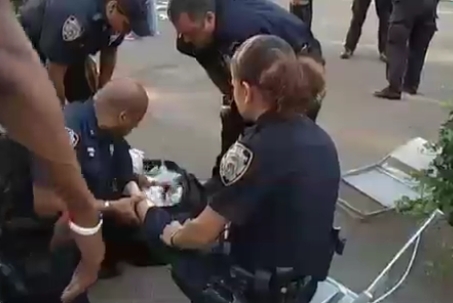
WALLINGFORD, Conn., Sept. 15 (UPI) -- A new hemostatic trauma kit to quickly stop bleeding is now available to law enforcement agencies around the United States.
Z-Medica, which has headquarters in Connecticut, this week launched its QuikClot Belt Trauma Kit designed for law enforcement agencies and said it can achieve hemostasis in severe bleeding situations in as little as three minutes.
"We understand that law enforcement officers often face situations that involve traumatic bleeding where emergency medical care is not available, so we designed a practical tool to help them almost immediately stop uncontrolled bleeding," said Z-Medica Chief Executive Officer Brian Herrman. "The new QuikClot Belt Trauma Kit includes the QuikClot product that every U.S. soldier carries, and which many law enforcement officers are already carrying, combined with all of the tools needed to stop traumatic bleeding in a lightweight pack."
The 5.75-inch-by-4-inch kit includes either QuikClot First Response or QuikClot Combat Gauze, plus SWAT-Tourniquet, a cardiopulmonary resuscitation shield and gloves. The kit is designed to be worn on an officer's duty belt along with other gear, taking up little space.

Tuesday, September 14, 2010

Global market for surgical hemostats gets bloody!

By showing the pie chart below, with all of its overlapping labels and clutter, we do so not out of any lack of graphing skills but as a blunt reflection of how competitive the global market for surgical hemostats has become.


The number of competitors in this field has rapidly multiplied, driven by the relatively low barriers to market entry and the recent market success of a range of different hemostat product types that are being steadily adopted in clinical practice.  Hemostats have become accepted tools in the armamentaria of surgeons, both as stand alone products for stopping bleeding of traumatic and surgical wounds and as adjuncts to other wound sealing and closure technologies.
The natural course of proliferation inevitably leads to market consolidation and this is the short term prospect for products in hemostasis as well established players seek to literally buy greater market share and broaden their product portfolios.

Source: MedMarket Diligence, LLC; Report #S180 (pending publication).

Sunday, September 12, 2010

Powder Hemostatic Medical Devices Segment

To date there are many types of Hemostatic Medical Devices on the market, there are also a plethora of formats utilized e.g. gauze, liquid, pastes and powders. Today I will introduce a list of powders, and while not comprehensive it is indicative of current technologies available to the surgeon. Initially Oxi Cell, Gelatin and Avitene powders were the main products. However now Chitin, and Starch/polysacharides have increased in visibility originally, and now with a very large program of out-licensing of the same technologies under different names. Powders face application and procedural technique issues, as do all formats. Over the following weeks I would like to explore needs, demands and evaluate these systems. Repetitive technology re-branding is also something I hope Blog followers will offer further thoughts on, another item to be considered is sourcing, manufacturing source such as China and due diligence of some of these companies. If you wish to contribute experience or thoughts please feel free to contact me at hemostatguy@gmail.com. We will also explore geographic factors, manufacturing,. distribution and due diligence


Pro Fibrix - Fibrocaps thrombin fibrinogen
 A dry powder based on a mixture of fibrinogen and thrombin, Fibrocaps is a ready-to-use preparation designed to be stable at room temperature and applied in different formats. This is a product and company that shows innovation! Pro Fibrix feel free to contact me.....hemostatguy@gmail.com


HemostasisLLC - Starch


BioCer Entwicklungs-GmbH is a Bayreuth, Germany based company which commercializes innovative technologies developed in conjunction with leading German Research Institutes and Universities.
Biocer have the most powerful of the plant based Starch products with HaemoCer Plus which was commercialized in Q3 2013. The video shows HaemoCer Pl;us compared to the other powdered polysaccharides with double speed and double absorbency. 
Starch Medical - PerClot Starch (AKA OrthoClot)
Absorbable Modified Polymer (AMP™) Chinese technology is a proprietary engineering process that modifies plant starch into ultra-hydrophilic, adhesive forming hemostatic polymers. AMP™ materials are biocompatible, absorbable polysaccharides containing no animal or human components. 

ClotPlus - OrthoClot Starch (AKA PerClot)
OrthoClot™ China made Polysaccharide Haemostatic System Administrator (PHS) is a natural plant-based haemostatic system composed of Absorbable Modified Polymer (AMP™). OrthoClot™ is intended as an absorbable haemostatic system

Medafor - Arista Starch (Outlicensed as Hemostase and Vitasure)
Arista™AH is an absorbable hemostat, based on Medafor's patented MPH® (Microporous Polysaccharide Hemospheres) Technology that is used in the control of profuse bleeding in general surgery when conventional procedures are ineffective or impractical.
CryoLife - Hemostase starch (AKA Arista and Vitasure) 
HemoStase is a plant-based powder that rapidly dehydrates blood and promotes clotting on contact.

Orthovita - Vitasure Starch (AKA Arista, Hemostase)
Vitasure Absorbable Hemostat is comprised of many powerful polysaccharide spheres packaged within a bellows applicator.


Celox - Chitin
Celox™ is made with chitosan, a natural polysaccharide. Chitosan has a known metabolic pathway. That means any left in the body is broken down by the bodies normal enzymes and converted into materials normally present in the body.
Hemcon (Alltracel) - Oxi Cell

Davol - Avitene
Ethicon - Gelatin Powder

Friday, September 10, 2010

Transfusion may do more harm than good..........

Watch the full episode. See more Need To Know.

Uni of Alabama at Birmingham Hospital reduced blood use by at least 25%...and slashed blood-related costs by $3.5 million annually

The results from such centres as the Englewood Medical Centre in the USA show that bloodless cardiac surgery is not only as good, but the results are actually better for those who avoid blood transfusion than those who are transfused. Murphy and colleagues in 2007 concluded that “Red blood cell transfusion in patients having cardiac surgery is strongly associated with both infection and ischemic postoperative morbidity, hospital stay, increased early and late mortality, and hospital costs.” (Murphy GJ Reeves BC Rogers CA et al Increased Mortality, Postoperative Morbidity, and Cost After Red Blood Cell Transfusion in Patients Having Cardiac Surgery.Circulation. 2007;116:2544-2552.)
More recently, Patient Blood Management programs have been introduced in many US hospitals and the Australian National Blood Service has set up a Patient Blood Management Steering Company. Commenting in their 19th August 2010 Daily Briefing, the Advisory Board Company also noted the cost savings available through Patient Blood Management: “About 110 hospitals currently have blood management programs, up from about 70 facilities in 2002 ... One program at the University of Alabama at Birmingham Hospital reduced blood use by at least 25% since 2003 and slashed blood-related costs by $3.5 million annually.”
The next generation of medical practitioners will no longer consider transfusion a free, helpful expedient. Instead they will seek ways to ensure that all uncomplicated elective surgery is achieved without any blood being transfused. That will save the precious gift of blood donors for those who really need it.

Increased Mortality, Postoperative Morbidity, and Cost After Red Blood Cell Transfusion in Patients Having Cardiac Surgery - Click Thumbnail to enlarge


Department of Defense awards Entegrion $8.2M to develop dried plasma

Life sciences company Entegrion has won a two-year, $8.2 million contract from the U.S. Department of Defense to continue development of a dried human plasma product that can be used for transfusions.
The Research Triangle Park-based company will deploy the funds to “scale-up” production and to develop efficient manufacturing processes for the production of the dried plasma, which has a longer shelf life than liquid plasma and does not have to be refrigerated, making it much easier to transport.
“This technology will help improve the safety and availability of blood and blood products for transfusion in domestic and global health applications, and we are pleased to see the military’s continued confidence and investment commitment to the technology,” said Joseph A. DaCorta, vice president and chief technology officer of Entegrion.
Entegrion develops products that help to control bleeding. Human blood contains proteins and clotting factors, is often used in situations in which patients suffer severe bleeding. Entegrion’s dried plasma product is designed to be quickly rehydrated, offering a time advantage of fresh frozen plasma, which can take time to thaw.

Thursday, September 9, 2010

"There was...crap in that stuff. This stuff was manky, it was filthy, it was dirty ... but they still stuck it in the arms of children"

Patients have called for the inquiry into how people were given infected blood by the Scottish NHS to have a wider remit, as hundreds of pages of evidence were published.
Campaigners hailed the release yesterday of the preliminary report by Lord Penrose, who is chairing the probe, as a milestone.
It included a list of issues that he will investigate during the next year, among them the use of commercial blood products after it was realised internationally that they carried a risk of Aids and the acceptance of blood donations from prisoners.
Hundreds of people in Scotland were given contaminated blood in the 1970s and 1980s either as treatment for blood clotting disorders or through blood transfusions.
The plight of those who caught HIV or hepatitis C as a result is acknowledged in the opening of the preliminary report.
It says: “It would have been impossible for any person involved in this inquiry to have been unaware of and to have remained untouched by the physical, mental and emotional suffering of the individuals and families affected by these serious and potentially fatal diseases.”
Campaign groups including Haemophilia Scotland said that after years of frustration they were pleased to have such a substantial document.
However, they expressed concern that many of the victims and their families who want to be core participants with legal representation when the inquiry progresses to oral hearings will be disappointed.
About 70 patients and their relatives applied to Lord Penrose to be core participants, but so far it is understood about 14 have been accepted.
In addition, Bruce Norval, who has hepatitis C after receiving contaminated blood, complained the inquiry would not explore other infections – in addition to hepatitis C and HIV – to which haemophiliacs given clotting agents may have been exposed.
He said: “One thing that needs to be highlighted is that haemophiliacs are due a public, truthful account of the full toxic potential of the clotting agents we were treated with from childhood. At the moment, the remit would not fully allow for that.
“What we are trying to get is an understanding why this small group of people, which was 500 strong, are now down to half that number, with more dying on a monthly basis.
“There was all kinds of crap in that stuff. This stuff was manky, it was filthy, it was dirty and they knew it, but they still stuck it in the arms of children.”
The inquiry will examine how patients affected were tested for infections and informed about the results. According to the report, almost two-thirds of patient witnesses said they did not know they were being tested for hepatitis C or HIV and a number describe finding out they had hepatitis C years after tests were carried out.
Lord Penrose has been given accounts of doctors dismissing the illness as “nothing to worry about”, while one witness with HIV said the doctor who told his family was “quite blase”.
The report was released after the inquiry team analysed more than 80,000 documents and took more than 100 statements from patients and relatives.
Solicitor Advocate Patrick McGuire, of Thompsons solicitors, the recognised legal representative of families and sufferers, welcomed the report.
He said: “The document … is clearly very well reasoned and therefore a clear measure of the amount of work that has been put in by Lord Penrose and his team and for that I would personally like to thank him.”
He added that it was subject to consultation and he would be discussing some issues with Lord Penrose.
Lord Penrose said: “It is important to emphasise that I have not reached any conclusions on matters of fact or provided any recommendations at this stage and the list of topics that I have included for further investigation at the public hearings is not definitive.
“I am now inviting comments on these topics from interested individuals and organisations by the end of October.”

Wednesday, September 8, 2010

Bristol-Myers Squibb to Acquire ZymoGenetics

BMS to Pick Up ZymoGenetics for $885M
NEW YORK & SEATTLE, Sep 07, 2010 (BUSINESS WIRE) -- --Gains Full Rights to Promising Phase II Hepatitis C Biologic, Pegylated-Interferon Lambda

--Obtains FDA-Approved Specialty Surgical Biologic, RECOTHROM(R)

--Attains Early Clinical and Pre-clinical Programs in Oncology and Immunoscience

Bristol-Myers Squibb Company (BMY 26.78, +0.17, +0.64%) and ZymoGenetics, Inc.(ZGEN 9.76, +4.46, +84.06%) announced today that the companies have signed a definitive agreement providing for the acquisition of ZymoGenetics by Bristol-Myers Squibb, for $9.75 per share in cash. The transaction, with an aggregate purchase price of approximately $885 million, or approximately $735 million net of cash acquired, has been unanimously approved by the boards of directors of both companies. The board of directors of ZymoGenetics intends to recommend that ZymoGenetics' shareholders tender their shares in the tender offer. In addition, shareholders holding approximately 37% of the outstanding shares of ZymoGenetics' common stock have entered into agreements with Bristol-Myers Squibb to support the transaction and to tender their shares in the offer.

"The acquisition of ZymoGenetics brings us full ownership of a promising investigational biologic that strengthens our very diversified Hepatitis C portfolio. Building on our leadership in virology, we are developing a strong portfolio to help patients with Hepatitis C," said Lamberto Andreotti, chief executive officer, Bristol-Myers Squibb. "In addition, ZymoGenetics brings proven capabilities with therapeutic proteins and revenue from a marketed specialty surgical biologic. This acquisition is another example of our strategic, targeted approach to business development."

"By joining forces with Bristol-Myers Squibb, we believe we will enhance the long-term potential of ZymoGenetics' portfolio of assets, while providing a compelling valuation for our shareholders," said Douglas E. Williams, Ph.D., chief executive officer of ZymoGenetics. "Our collaboration with Bristol-Myers Squibb in the development of PEG-Interferon lambda has been extremely positive and it has given us an opportunity to fully appreciate their capabilities. We believe that this transaction will maximize the potential for our products and product candidates to make a meaningful difference for patients in need."

Bristol-Myers Squibb gains the following as a result of the acquisition:

-- Full ownership of pegylated-interferon lambda, a novel interferon in Phase IIb development for the treatment of Hepatitis C infection, which, if approved, could be an important contributor to Bristol-Myers Squibb's future growth. The companies have collaborated on the development of pegylated-interferon lambda since January 2009. Four-week and 12-week results from a Phase IIa study will be presented at the American Association for the Study of Liver Diseases meeting later this year.

-- RECOTHROM(R), a recombinant thrombin approved by the U.S. Food and Drug Administration for use as a topical hemostat to control non-arterial bleeding during surgical procedures.

-- IL-21 protein, a cytokine currently being tested in an open-label, Phase II clinical study as a potential immunotherapy treatment for metastatic melanoma.

-- An earlier-stage pipeline of six biologic drug candidates, including an anti-IL-31 antibody, currently in pre-clinical development for atopic dermatitis.

-- Potential milestone and royalty payments from six partnered programs in various stages of clinical development by EMD Serono, Inc., an affiliate of Merck KGaA, and Novo Nordisk.

"ZymoGenetics is a leader in advancing novel biologics, particularly genomics-based therapies," said Elliott Sigal, M.D., Ph.D., executive vice president and chief scientific officer, Bristol-Myers Squibb. "We expect ZymoGenetics' pipeline and biologics capabilities to complement and enhance our existing efforts in Hepatitis C, oncology and immunoscience."

Initially, the transaction is expected to be modestly dilutive to earnings per share (EPS) for Bristol-Myers Squibb. In 2010, the transaction is expected to be dilutive to EPS by approximately $0.03. In 2011, the transaction is expected to be dilutive to EPS by approximately $0.07.

Under the terms of the definitive agreement, Bristol-Myers Squibb will commence a cash tender offer on or about September 9, 2010 to purchase all of the outstanding shares of ZymoGenetics' common stock for $9.75 per share. The closing of the tender offer is subject to customary terms and conditions, including the tender of a number of shares which is equal to or greater than 48,282,192 shares (which represents approximately 56% of the outstanding shares as of August 31, 2010, which represent a majority of the shares on a fully-diluted basis, excluding certain shares underlying derivative securities that are significantly out-of-the-money), and the expiration or termination of the waiting period under the Hart-Scott-Rodino Antitrust Improvements Act. The agreement also provides for the parties to effect, subject to customary conditions, a merger to be completed following the completion of the tender offer which would result in all shares not tendered in the tender offer being converted into the right to receive $9.75 per share in cash. The merger agreement contains a provision under which ZymoGenetics has agreed not to solicit any competing offers for the company. Bristol-Myers Squibb will finance the acquisition from its existing cash resources. The companies expect the tender offer to close approximately thirty days after commencement of the tender offer.

Morgan Stanley & Co. Incorporated is serving as financial advisor to Bristol-Myers Squibb in connection with the acquisition, and Bristol-Myers Squibb is represented by Kirkland & Ellis LLP. Goldman, Sachs & Co. is serving as financial advisor to ZymoGenetics in connection with the acquisition, and ZymoGenetics is represented by Latham & Watkins LLP and Fenwick & West LLP.